Category: Credit & Reports

Credit guides covering credit reports, credit scores, report errors, disputes, and safer credit monitoring.

  • Credit Report vs Credit Score: What Is the Difference?

    Credit Report vs Credit Score: What Is the Difference?

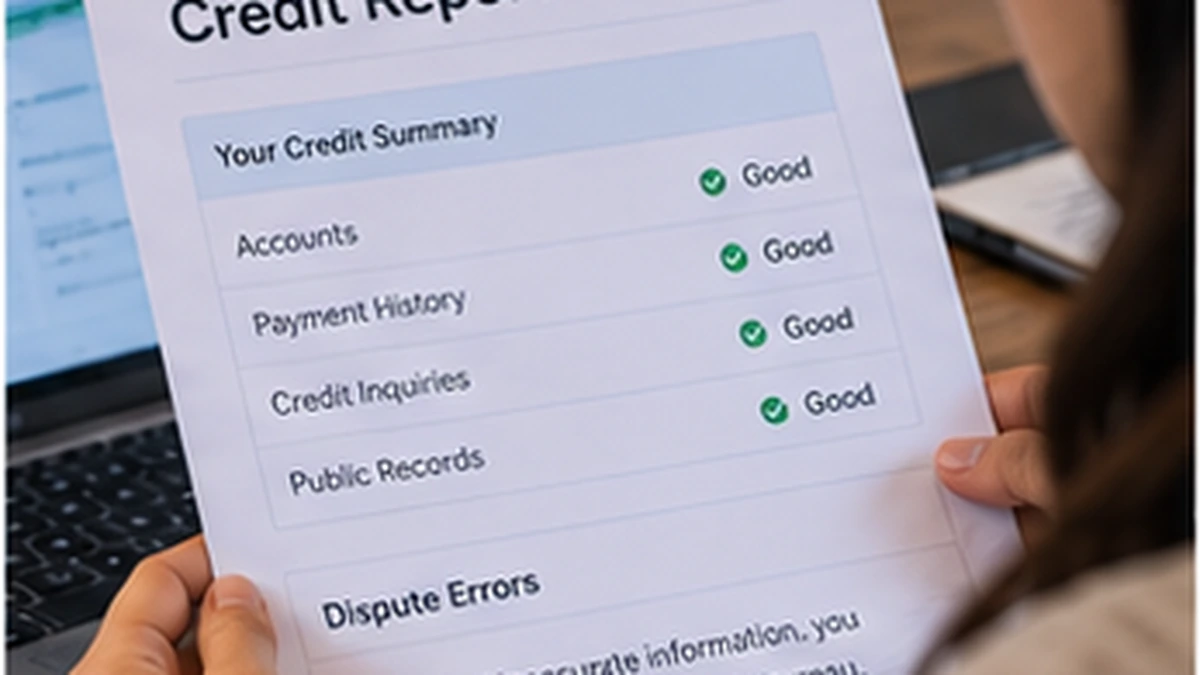
    Credit report vs credit score A credit report and a credit score are connected, but they are not the same product. The report contains the underlying history, while a score is a number calculated from report information using a particular scoring model.

    This guide explains credit report vs credit score for general financial education. It does not provide individualized investment, tax, legal, credit, or banking advice. Some authoritative sources are U.S.-focused, so readers elsewhere should verify local rules and product terms with the appropriate authority.

    Why credit report vs credit score matters

    Treat the credit score as a summary signal and the credit report as the evidence file. If the score changes unexpectedly, start by reviewing the underlying report rather than trying to guess which scoring factor changed.

    A credit report contains account information

    Reports can include credit accounts, payment history, balances, inquiries, and other information supplied to a credit reporting company.

    For credit report vs credit score, connect this section to one real number, account, report item, contribution, or decision in your own finances. Review checkpoint 1: write the relevant amount, date, fee, balance, or goal so the idea can be tested rather than remaining theoretical.

    A credit score is calculated

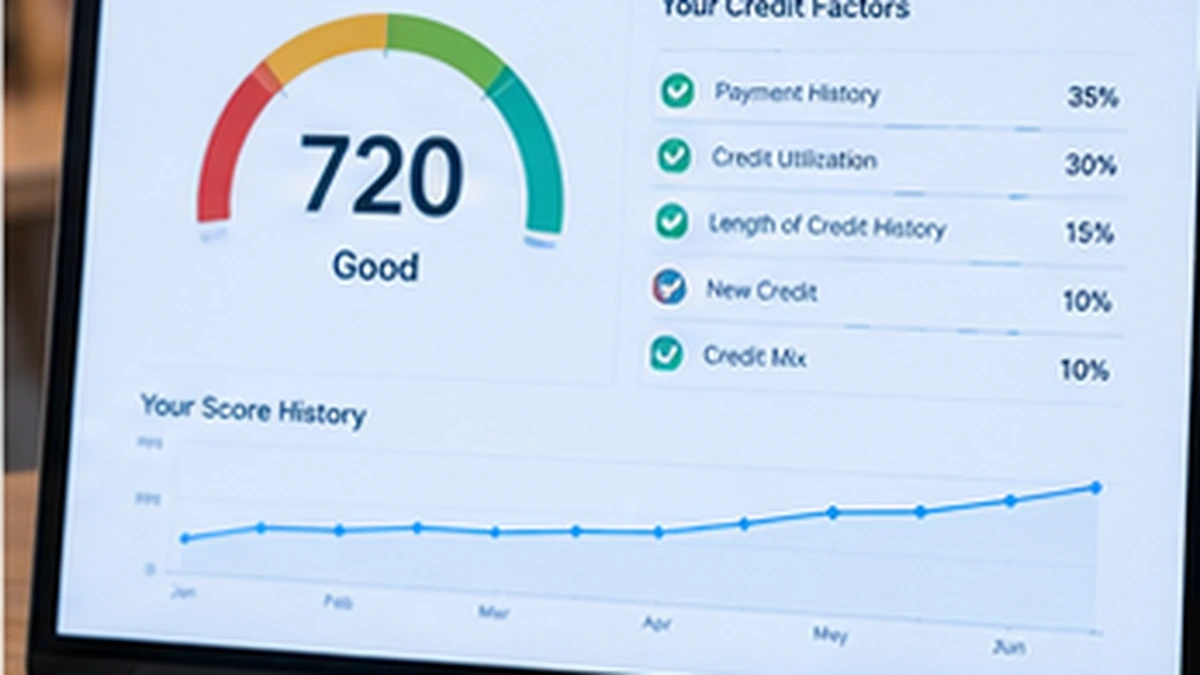
    A score is generated from report data using a scoring model designed to estimate credit risk. Different models can produce different numbers.

    For credit report vs credit score, connect this section to one real number, account, report item, contribution, or decision in your own finances. Review checkpoint 2: write the relevant amount, date, fee, balance, or goal so the idea can be tested rather than remaining theoretical.

    Reports provide the detail behind the number

    Account names, balances, payment status, dates, limits, and other fields can explain why the underlying credit history looks the way it does.

    For credit report vs credit score, connect this section to one real number, account, report item, contribution, or decision in your own finances. Review checkpoint 3: write the relevant amount, date, fee, balance, or goal so the idea can be tested rather than remaining theoretical.

    Scores are not universal

    A lender may use a different model or report version from the score a consumer sees through another service.

    For credit report vs credit score, connect this section to one real number, account, report item, contribution, or decision in your own finances. Review checkpoint 4: write the relevant amount, date, fee, balance, or goal so the idea can be tested rather than remaining theoretical.

    Report errors can affect scores

    CFPB emphasizes that incorrect report information can harm credit history and the scores calculated from it.

    For credit report vs credit score, connect this section to one real number, account, report item, contribution, or decision in your own finances. Review checkpoint 5: write the relevant amount, date, fee, balance, or goal so the idea can be tested rather than remaining theoretical.

    Payment history matters

    Paying obligations on time supports a stronger credit history, although individual scoring models weigh factors differently.

    For credit report vs credit score, connect this section to one real number, account, report item, contribution, or decision in your own finances. Review checkpoint 6: write the relevant amount, date, fee, balance, or goal so the idea can be tested rather than remaining theoretical.

    Credit utilization can matter

    High balances relative to revolving credit limits can affect some scoring models, particularly when a large share of available credit is used.

    For credit report vs credit score, connect this section to one real number, account, report item, contribution, or decision in your own finances. Review checkpoint 7: write the relevant amount, date, fee, balance, or goal so the idea can be tested rather than remaining theoretical.

    New credit activity can matter

    Recent inquiries and newly opened accounts can influence certain scoring models, especially when several applications occur close together.

    For credit report vs credit score, connect this section to one real number, account, report item, contribution, or decision in your own finances. Review checkpoint 8: write the relevant amount, date, fee, balance, or goal so the idea can be tested rather than remaining theoretical.

    Closing accounts can change the picture

    Closing a revolving account can reduce available credit and change utilization, which can affect a score depending on the rest of the file.

    For credit report vs credit score, connect this section to one real number, account, report item, contribution, or decision in your own finances. Review checkpoint 9: write the relevant amount, date, fee, balance, or goal so the idea can be tested rather than remaining theoretical.

    Review the report, not only the score

    A score cannot show whether an unknown account, wrong balance, incorrect address, or identity-theft indicator is present in the report.

    For credit report vs credit score, connect this section to one real number, account, report item, contribution, or decision in your own finances. Review checkpoint 10: write the relevant amount, date, fee, balance, or goal so the idea can be tested rather than remaining theoretical.

    A realistic example of credit report vs credit score

    A person wants to improve this part of their finances and initially focuses on one attractive number, such as a high rate, low fee, strong score, or recent return. After reviewing the full account terms, budget, risk, time horizon, and goal, the person chooses a plan that is easier to maintain. The example shows why credit report vs credit score should be connected to the whole financial picture rather than one headline figure.

    Connect this guide to the rest of the finance site

    Read review a credit report for one related finance topic, and use financial scams and identity theft when the second guide helps you understand saving, credit, investing, retirement, or financial safety.

    These internal links connect the first Finance batch so readers can move between budgeting, banking, credit, investing, retirement, and fraud protection without repeating the same article.

    A seven-day review plan for credit report vs credit score

    Day 1: define the goal. Day 2: collect the relevant account, statement, report, or budget data. Day 3: compare the information with the authoritative source below. Day 4: identify costs, risks, and missing information. Day 5: make one small adjustment. Day 6: verify that the change worked as intended. Day 7: record the next step and a date to review the result again. Finance review note 4 for credit report vs credit score.

    The seven-day structure is only a framework. A credit-report correction or account transfer can require more time, while a simple budget or savings update may take less than an hour.

    Practical checklist

    • Purpose of credit report vs credit score identified
    • Current financial information collected
    • Costs, fees, or risks reviewed
    • Authoritative source checked
    • Assumptions separated from facts
    • Privacy and security considered
    • One practical next step selected
    • Review date scheduled

    Use the checklist to find the weakest part of your understanding of credit report vs credit score. One overlooked fee, report error, concentration risk, or security problem can matter more than several details you already understand.

    Frequently Asked Questions

    Is there one financial strategy that works for everyone?

    No. Income, expenses, goals, time horizon, taxes, debt, risk tolerance, and local rules differ. General frameworks should be adapted to the person’s actual situation.

    Should short-term savings and long-term investments be handled the same way?

    Usually not. Money needed soon generally needs more stability and access, while long-term investing can accept more market fluctuation depending on risk tolerance and the goal.

    Can one financial number tell me whether a decision is good?

    No. A rate, score, return, fee, or balance is only part of the picture. Review the product terms, cash-flow effect, risk, and goal together.

    Where should I verify financial information?

    Use the bank, regulator, tax authority, securities regulator, credit-reporting company, or other official source with authority over the product or issue in your jurisdiction.

    Practical review 1 for credit report vs credit score

    Take one real account, statement, report, or savings goal and explain it in plain language. Identify the amount involved, the cost or risk, what can change, and what action would improve the situation. If any part depends on a rule or product term you cannot verify, check it before acting. Finance review note 14 for credit report vs credit score.

    Then compare the current approach with one realistic alternative. The goal is not to find a perfect financial answer; it is to understand the trade-off well enough to choose the next step deliberately and to know what evidence would make you change that decision later. Finance review note 14 for credit report vs credit score.

    Practical review 2 for credit report vs credit score

    Take one real account, statement, report, or savings goal and explain it in plain language. Identify the amount involved, the cost or risk, what can change, and what action would improve the situation. If any part depends on a rule or product term you cannot verify, check it before acting. Finance review note 15 for credit report vs credit score.

    Then compare the current approach with one realistic alternative. The goal is not to find a perfect financial answer; it is to understand the trade-off well enough to choose the next step deliberately and to know what evidence would make you change that decision later. Finance review note 15 for credit report vs credit score.

    Practical review 3 for credit report vs credit score

    Take one real account, statement, report, or savings goal and explain it in plain language. Identify the amount involved, the cost or risk, what can change, and what action would improve the situation. If any part depends on a rule or product term you cannot verify, check it before acting. Finance review note 16 for credit report vs credit score.

    Then compare the current approach with one realistic alternative. The goal is not to find a perfect financial answer; it is to understand the trade-off well enough to choose the next step deliberately and to know what evidence would make you change that decision later. Finance review note 16 for credit report vs credit score.

    Practical review 4 for credit report vs credit score

    Take one real account, statement, report, or savings goal and explain it in plain language. Identify the amount involved, the cost or risk, what can change, and what action would improve the situation. If any part depends on a rule or product term you cannot verify, check it before acting. Finance review note 17 for credit report vs credit score.

    Then compare the current approach with one realistic alternative. The goal is not to find a perfect financial answer; it is to understand the trade-off well enough to choose the next step deliberately and to know what evidence would make you change that decision later. Finance review note 17 for credit report vs credit score.

    Practical review 5 for credit report vs credit score

    Take one real account, statement, report, or savings goal and explain it in plain language. Identify the amount involved, the cost or risk, what can change, and what action would improve the situation. If any part depends on a rule or product term you cannot verify, check it before acting. Finance review note 18 for credit report vs credit score.

    Then compare the current approach with one realistic alternative. The goal is not to find a perfect financial answer; it is to understand the trade-off well enough to choose the next step deliberately and to know what evidence would make you change that decision later. Finance review note 18 for credit report vs credit score.

    Authoritative resource to review

    For an authoritative reference related to this topic, review Consumer Financial Protection Bureau – Credit Reports and Scores. Use the source for the core principle, then verify the exact account terms, local rules, and personal circumstances before acting.

    Final perspective

    Credit report vs credit score becomes easier when the process is simple enough to repeat. Use real numbers, keep records, understand risk, protect accounts, and review the plan periodically instead of relying on one-time decisions or financial promises.
  • How to Review a Credit Report and Dispute Errors

    How to Review a Credit Report and Dispute Errors

    Review a credit report Reviewing a credit report is a quality-control task. The goal is to confirm that the file belongs to you, the accounts are yours, account status is accurate, balances and limits are correct, and negative information is not duplicated or reported under the wrong identity.

    This guide explains review a credit report for general financial education. It does not provide individualized investment, tax, legal, credit, or banking advice. Some authoritative sources are U.S.-focused, so readers elsewhere should verify local rules and product terms with the appropriate authority.

    Why review a credit report matters

    A dispute is easier to investigate when each error is described separately and supported with a specific document. A long emotional explanation is usually less useful than a short statement identifying the exact field, why it is wrong, and what evidence supports correction.

    Check identity information first

    CFPB recommends reviewing names, addresses, and other identifying information so a mixed file or identity mistake is easier to detect.

    For review a credit report, connect this section to one real number, account, report item, contribution, or decision in your own finances. Review checkpoint 1: write the relevant amount, date, fee, balance, or goal so the idea can be tested rather than remaining theoretical.

    Look for unfamiliar accounts

    An account you did not open may reflect a reporting error, a mixed file, or identity theft and deserves investigation.

    For review a credit report, connect this section to one real number, account, report item, contribution, or decision in your own finances. Review checkpoint 2: write the relevant amount, date, fee, balance, or goal so the idea can be tested rather than remaining theoretical.

    Check account ownership

    Verify whether you are correctly listed as owner, joint owner, or authorized user rather than assuming every listed account has the right relationship.

    For review a credit report, connect this section to one real number, account, report item, contribution, or decision in your own finances. Review checkpoint 3: write the relevant amount, date, fee, balance, or goal so the idea can be tested rather than remaining theoretical.

    Review payment status

    Look for accounts incorrectly marked late, delinquent, open, or closed.

    For review a credit report, connect this section to one real number, account, report item, contribution, or decision in your own finances. Review checkpoint 4: write the relevant amount, date, fee, balance, or goal so the idea can be tested rather than remaining theoretical.

    Check important dates

    Opening dates, last-payment dates, and delinquency dates can affect how an account is interpreted.

    For review a credit report, connect this section to one real number, account, report item, contribution, or decision in your own finances. Review checkpoint 5: write the relevant amount, date, fee, balance, or goal so the idea can be tested rather than remaining theoretical.

    Review balances and limits

    CFPB identifies incorrect balances and credit limits among common credit-report errors.

    For review a credit report, connect this section to one real number, account, report item, contribution, or decision in your own finances. Review checkpoint 6: write the relevant amount, date, fee, balance, or goal so the idea can be tested rather than remaining theoretical.

    Watch for duplicate debts

    The same obligation can sometimes appear more than once under different names, particularly after collection activity.

    For review a credit report, connect this section to one real number, account, report item, contribution, or decision in your own finances. Review checkpoint 7: write the relevant amount, date, fee, balance, or goal so the idea can be tested rather than remaining theoretical.

    Collect evidence before disputing

    Statements, account letters, payment records, identity documents, or court records can support a dispute.

    For review a credit report, connect this section to one real number, account, report item, contribution, or decision in your own finances. Review checkpoint 8: write the relevant amount, date, fee, balance, or goal so the idea can be tested rather than remaining theoretical.

    Dispute with the reporting company and furnisher

    CFPB explains that consumers can dispute inaccurate information with the credit reporting company and the company that supplied the information.

    For review a credit report, connect this section to one real number, account, report item, contribution, or decision in your own finances. Review checkpoint 9: write the relevant amount, date, fee, balance, or goal so the idea can be tested rather than remaining theoretical.

    Keep the dispute record

    Save the report, submitted dispute, supporting documents, delivery or confirmation details, investigation response, and any corrected report.

    For review a credit report, connect this section to one real number, account, report item, contribution, or decision in your own finances. Review checkpoint 10: write the relevant amount, date, fee, balance, or goal so the idea can be tested rather than remaining theoretical.

    A realistic example of review a credit report

    A person wants to improve this part of their finances and initially focuses on one attractive number, such as a high rate, low fee, strong score, or recent return. After reviewing the full account terms, budget, risk, time horizon, and goal, the person chooses a plan that is easier to maintain. The example shows why review a credit report should be connected to the whole financial picture rather than one headline figure.

    Connect this guide to the rest of the finance site

    Read credit report vs credit score for one related finance topic, and use financial scams and identity theft when the second guide helps you understand saving, credit, investing, retirement, or financial safety.

    These internal links connect the first Finance batch so readers can move between budgeting, banking, credit, investing, retirement, and fraud protection without repeating the same article.

    A seven-day review plan for review a credit report

    Day 1: define the goal. Day 2: collect the relevant account, statement, report, or budget data. Day 3: compare the information with the authoritative source below. Day 4: identify costs, risks, and missing information. Day 5: make one small adjustment. Day 6: verify that the change worked as intended. Day 7: record the next step and a date to review the result again. Finance review note 5 for review a credit report.

    The seven-day structure is only a framework. A credit-report correction or account transfer can require more time, while a simple budget or savings update may take less than an hour.

    Practical checklist

    • Purpose of review a credit report identified
    • Current financial information collected
    • Costs, fees, or risks reviewed
    • Authoritative source checked
    • Assumptions separated from facts
    • Privacy and security considered
    • One practical next step selected
    • Review date scheduled

    Use the checklist to find the weakest part of your understanding of review a credit report. One overlooked fee, report error, concentration risk, or security problem can matter more than several details you already understand.

    Frequently Asked Questions

    Is there one financial strategy that works for everyone?

    No. Income, expenses, goals, time horizon, taxes, debt, risk tolerance, and local rules differ. General frameworks should be adapted to the person’s actual situation.

    Should short-term savings and long-term investments be handled the same way?

    Usually not. Money needed soon generally needs more stability and access, while long-term investing can accept more market fluctuation depending on risk tolerance and the goal.

    Can one financial number tell me whether a decision is good?

    No. A rate, score, return, fee, or balance is only part of the picture. Review the product terms, cash-flow effect, risk, and goal together.

    Where should I verify financial information?

    Use the bank, regulator, tax authority, securities regulator, credit-reporting company, or other official source with authority over the product or issue in your jurisdiction.

    Practical review 1 for review a credit report

    Take one real account, statement, report, or savings goal and explain it in plain language. Identify the amount involved, the cost or risk, what can change, and what action would improve the situation. If any part depends on a rule or product term you cannot verify, check it before acting. Finance review note 19 for review a credit report.

    Then compare the current approach with one realistic alternative. The goal is not to find a perfect financial answer; it is to understand the trade-off well enough to choose the next step deliberately and to know what evidence would make you change that decision later. Finance review note 19 for review a credit report.

    Practical review 2 for review a credit report

    Take one real account, statement, report, or savings goal and explain it in plain language. Identify the amount involved, the cost or risk, what can change, and what action would improve the situation. If any part depends on a rule or product term you cannot verify, check it before acting. Finance review note 20 for review a credit report.

    Then compare the current approach with one realistic alternative. The goal is not to find a perfect financial answer; it is to understand the trade-off well enough to choose the next step deliberately and to know what evidence would make you change that decision later. Finance review note 20 for review a credit report.

    Practical review 3 for review a credit report

    Take one real account, statement, report, or savings goal and explain it in plain language. Identify the amount involved, the cost or risk, what can change, and what action would improve the situation. If any part depends on a rule or product term you cannot verify, check it before acting. Finance review note 21 for review a credit report.

    Then compare the current approach with one realistic alternative. The goal is not to find a perfect financial answer; it is to understand the trade-off well enough to choose the next step deliberately and to know what evidence would make you change that decision later. Finance review note 21 for review a credit report.

    Practical review 4 for review a credit report

    Take one real account, statement, report, or savings goal and explain it in plain language. Identify the amount involved, the cost or risk, what can change, and what action would improve the situation. If any part depends on a rule or product term you cannot verify, check it before acting. Finance review note 22 for review a credit report.

    Then compare the current approach with one realistic alternative. The goal is not to find a perfect financial answer; it is to understand the trade-off well enough to choose the next step deliberately and to know what evidence would make you change that decision later. Finance review note 22 for review a credit report.

    Practical review 5 for review a credit report

    Take one real account, statement, report, or savings goal and explain it in plain language. Identify the amount involved, the cost or risk, what can change, and what action would improve the situation. If any part depends on a rule or product term you cannot verify, check it before acting. Finance review note 23 for review a credit report.

    Then compare the current approach with one realistic alternative. The goal is not to find a perfect financial answer; it is to understand the trade-off well enough to choose the next step deliberately and to know what evidence would make you change that decision later. Finance review note 23 for review a credit report.

    Authoritative resource to review

    For an authoritative reference related to this topic, review Consumer Financial Protection Bureau – Common Credit Report Errors. Use the source for the core principle, then verify the exact account terms, local rules, and personal circumstances before acting.

    Final perspective

    Review a credit report becomes easier when the process is simple enough to repeat. Use real numbers, keep records, understand risk, protect accounts, and review the plan periodically instead of relying on one-time decisions or financial promises.