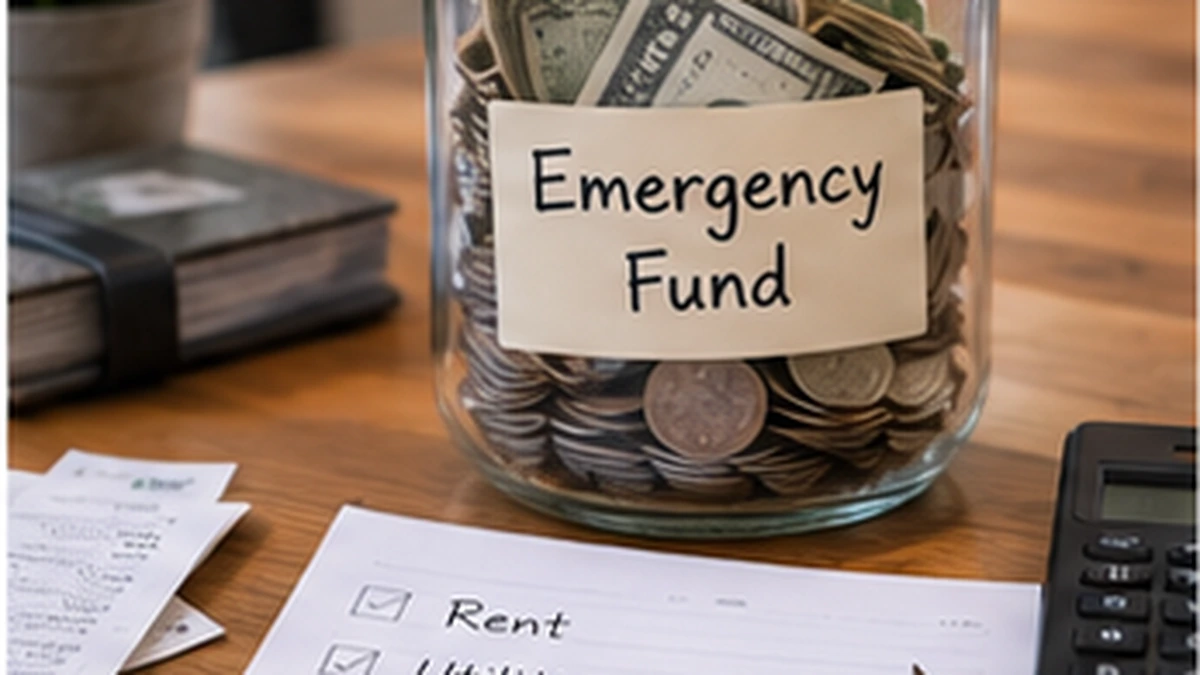
Build an emergency fund An emergency fund is money reserved for expenses that are not part of the normal monthly plan. It can reduce the need to use high-cost debt when a car breaks, income stops, a medical bill arrives, or another unexpected problem needs immediate cash.
This guide explains build an emergency fund for general financial education. It does not provide individualized investment, tax, legal, credit, or banking advice. Some authoritative sources are U.S.-focused, so readers elsewhere should verify local rules and product terms with the appropriate authority.
Why build an emergency fund matters
Instead of choosing an emergency target from a generic rule, calculate the cost of the three most realistic disruptions in your life. That exercise produces a target connected to your housing, transport, health, and income rather than to someone else’s circumstances.
Define what counts as an emergency
CFPB describes emergency savings as a cash reserve for unplanned expenses or financial emergencies. Write examples that apply to your own household.
For build an emergency fund, connect this section to one real number, account, report item, contribution, or decision in your own finances. Review checkpoint 1: write the relevant amount, date, fee, balance, or goal so the idea can be tested rather than remaining theoretical.
Choose a target based on real risk
Review past emergencies and the expenses that would be hardest to absorb. A household with unstable income may value a different target from one with predictable pay.
For build an emergency fund, connect this section to one real number, account, report item, contribution, or decision in your own finances. Review checkpoint 2: write the relevant amount, date, fee, balance, or goal so the idea can be tested rather than remaining theoretical.
Start with a small first milestone
A reachable first target creates progress quickly and makes the saving habit easier to sustain before working toward a larger reserve.
For build an emergency fund, connect this section to one real number, account, report item, contribution, or decision in your own finances. Review checkpoint 3: write the relevant amount, date, fee, balance, or goal so the idea can be tested rather than remaining theoretical.
Keep the money separate
A separate savings account or clearly labeled savings bucket can reduce accidental spending and make the emergency balance easier to track.
For build an emergency fund, connect this section to one real number, account, report item, contribution, or decision in your own finances. Review checkpoint 4: write the relevant amount, date, fee, balance, or goal so the idea can be tested rather than remaining theoretical.
Automate deposits when possible
A recurring transfer after payday can turn saving into a routine, provided the amount does not cause required bills or normal spending to fail.
For build an emergency fund, connect this section to one real number, account, report item, contribution, or decision in your own finances. Review checkpoint 5: write the relevant amount, date, fee, balance, or goal so the idea can be tested rather than remaining theoretical.
Use windfalls intentionally
Tax refunds, bonuses, gifts, or stronger income months can accelerate progress when part of the money is assigned to the emergency reserve before it is spent elsewhere.
For build an emergency fund, connect this section to one real number, account, report item, contribution, or decision in your own finances. Review checkpoint 6: write the relevant amount, date, fee, balance, or goal so the idea can be tested rather than remaining theoretical.
Create rules for using the fund
Decide which events qualify and which expenses should be handled by the normal budget. Clear rules reduce both unnecessary withdrawals and hesitation during a real emergency.
For build an emergency fund, connect this section to one real number, account, report item, contribution, or decision in your own finances. Review checkpoint 7: write the relevant amount, date, fee, balance, or goal so the idea can be tested rather than remaining theoretical.
Refill after a withdrawal
Using the fund for a real emergency is not a failure. Rebuild it gradually after the event so the next disruption does not arrive with no buffer.
For build an emergency fund, connect this section to one real number, account, report item, contribution, or decision in your own finances. Review checkpoint 8: write the relevant amount, date, fee, balance, or goal so the idea can be tested rather than remaining theoretical.
Keep emergency money accessible
The reserve should generally be reachable without taking market risk or waiting through a long restriction, while still being separate from everyday spending.
For build an emergency fund, connect this section to one real number, account, report item, contribution, or decision in your own finances. Review checkpoint 9: write the relevant amount, date, fee, balance, or goal so the idea can be tested rather than remaining theoretical.
Review the target after life changes
Housing, family size, employment, health, transport, and other responsibilities can change the amount of emergency cash that makes sense.
For build an emergency fund, connect this section to one real number, account, report item, contribution, or decision in your own finances. Review checkpoint 10: write the relevant amount, date, fee, balance, or goal so the idea can be tested rather than remaining theoretical.
A realistic example of build an emergency fund
A person wants to improve this part of their finances and initially focuses on one attractive number, such as a high rate, low fee, strong score, or recent return. After reviewing the full account terms, budget, risk, time horizon, and goal, the person chooses a plan that is easier to maintain. The example shows why build an emergency fund should be connected to the whole financial picture rather than one headline figure.
Connect this guide to the rest of the finance site
Read build a monthly budget for one related finance topic, and use checking vs savings account when the second guide helps you understand saving, credit, investing, retirement, or financial safety.
These internal links connect the first Finance batch so readers can move between budgeting, banking, credit, investing, retirement, and fraud protection without repeating the same article.
A seven-day review plan for build an emergency fund
Day 1: define the goal. Day 2: collect the relevant account, statement, report, or budget data. Day 3: compare the information with the authoritative source below. Day 4: identify costs, risks, and missing information. Day 5: make one small adjustment. Day 6: verify that the change worked as intended. Day 7: record the next step and a date to review the result again. Finance review note 2 for build an emergency fund.
The seven-day structure is only a framework. A credit-report correction or account transfer can require more time, while a simple budget or savings update may take less than an hour.
Practical checklist
- Purpose of build an emergency fund identified
- Current financial information collected
- Costs, fees, or risks reviewed
- Authoritative source checked
- Assumptions separated from facts
- Privacy and security considered
- One practical next step selected
- Review date scheduled
Use the checklist to find the weakest part of your understanding of build an emergency fund. One overlooked fee, report error, concentration risk, or security problem can matter more than several details you already understand.
Frequently Asked Questions
Is there one financial strategy that works for everyone?
No. Income, expenses, goals, time horizon, taxes, debt, risk tolerance, and local rules differ. General frameworks should be adapted to the person’s actual situation.
Should short-term savings and long-term investments be handled the same way?
Usually not. Money needed soon generally needs more stability and access, while long-term investing can accept more market fluctuation depending on risk tolerance and the goal.
Can one financial number tell me whether a decision is good?
No. A rate, score, return, fee, or balance is only part of the picture. Review the product terms, cash-flow effect, risk, and goal together.
Where should I verify financial information?
Use the bank, regulator, tax authority, securities regulator, credit-reporting company, or other official source with authority over the product or issue in your jurisdiction.
Practical review 1 for build an emergency fund
Take one real account, statement, report, or savings goal and explain it in plain language. Identify the amount involved, the cost or risk, what can change, and what action would improve the situation. If any part depends on a rule or product term you cannot verify, check it before acting. Finance review note 5 for build an emergency fund.
Then compare the current approach with one realistic alternative. The goal is not to find a perfect financial answer; it is to understand the trade-off well enough to choose the next step deliberately and to know what evidence would make you change that decision later. Finance review note 5 for build an emergency fund.
Practical review 2 for build an emergency fund
Take one real account, statement, report, or savings goal and explain it in plain language. Identify the amount involved, the cost or risk, what can change, and what action would improve the situation. If any part depends on a rule or product term you cannot verify, check it before acting. Finance review note 6 for build an emergency fund.
Then compare the current approach with one realistic alternative. The goal is not to find a perfect financial answer; it is to understand the trade-off well enough to choose the next step deliberately and to know what evidence would make you change that decision later. Finance review note 6 for build an emergency fund.
Practical review 3 for build an emergency fund
Take one real account, statement, report, or savings goal and explain it in plain language. Identify the amount involved, the cost or risk, what can change, and what action would improve the situation. If any part depends on a rule or product term you cannot verify, check it before acting. Finance review note 7 for build an emergency fund.
Then compare the current approach with one realistic alternative. The goal is not to find a perfect financial answer; it is to understand the trade-off well enough to choose the next step deliberately and to know what evidence would make you change that decision later. Finance review note 7 for build an emergency fund.
Practical review 4 for build an emergency fund
Take one real account, statement, report, or savings goal and explain it in plain language. Identify the amount involved, the cost or risk, what can change, and what action would improve the situation. If any part depends on a rule or product term you cannot verify, check it before acting. Finance review note 8 for build an emergency fund.
Then compare the current approach with one realistic alternative. The goal is not to find a perfect financial answer; it is to understand the trade-off well enough to choose the next step deliberately and to know what evidence would make you change that decision later. Finance review note 8 for build an emergency fund.
Authoritative resource to review
For an authoritative reference related to this topic, review Consumer Financial Protection Bureau – Emergency Fund Guide. Use the source for the core principle, then verify the exact account terms, local rules, and personal circumstances before acting.
Final perspective
Build an emergency fund becomes easier when the process is simple enough to repeat. Use real numbers, keep records, understand risk, protect accounts, and review the plan periodically instead of relying on one-time decisions or financial promises.