
Author: admin

  • Financial Scams and Identity Theft: How to Protect Your Money and Accounts

    Financial Scams and Identity Theft: How to Protect Your Money and Accounts

    Financial scams and identity theft Financial scams and identity theft can begin with stolen account details, impersonation, urgent messages, fake fraud alerts, malicious links, or requests for verification codes. Protection depends on slowing down, verifying independently, and monitoring accounts rather than trusting the message that created the urgency.

    This guide explains financial scams and identity theft for general financial education. It does not provide individualized investment, tax, legal, credit, or banking advice. Some authoritative sources are U.S.-focused, so readers elsewhere should verify local rules and product terms with the appropriate authority.

    Why financial scams and identity theft matters

    A simple anti-scam rule is to separate the warning from the response. If a message says something is wrong, stop using the contact information inside that message and verify the situation through an official channel you find independently. This breaks the scammer’s control of the conversation.

    Identity theft uses information without permission

    FTC defines identity theft as someone using personal or financial information without authorization.

    For financial scams and identity theft, connect this section to one real number, account, report item, contribution, or decision in your own finances. Review checkpoint 1: write the relevant amount, date, fee, balance, or goal so the idea can be tested rather than remaining theoretical.

    Urgency is a common manipulation tool

    Scammers may claim that an account is compromised, a payment is overdue, or money must be moved immediately.

    For financial scams and identity theft, connect this section to one real number, account, report item, contribution, or decision in your own finances. Review checkpoint 2: write the relevant amount, date, fee, balance, or goal so the idea can be tested rather than remaining theoretical.

    Do not move money to protect it because a caller says so

    FTC warns that impersonators may tell people to move funds to a so-called safe account.

    For financial scams and identity theft, connect this section to one real number, account, report item, contribution, or decision in your own finances. Review checkpoint 3: write the relevant amount, date, fee, balance, or goal so the idea can be tested rather than remaining theoretical.

    Never share verification codes with an unexpected caller

    One-time codes can be used to take over accounts, even when the caller claims to work for the bank.

    For financial scams and identity theft, connect this section to one real number, account, report item, contribution, or decision in your own finances. Review checkpoint 4: write the relevant amount, date, fee, balance, or goal so the idea can be tested rather than remaining theoretical.

    Use official contact information

    Contact the bank or company through the official app, statement, card, or verified website instead of calling a number supplied by the suspicious message.

    For financial scams and identity theft, connect this section to one real number, account, report item, contribution, or decision in your own finances. Review checkpoint 5: write the relevant amount, date, fee, balance, or goal so the idea can be tested rather than remaining theoretical.

    Monitor transactions and statements

    Unexpected withdrawals, purchases, missing bills, or new accounts can reveal misuse quickly.

    For financial scams and identity theft, connect this section to one real number, account, report item, contribution, or decision in your own finances. Review checkpoint 6: write the relevant amount, date, fee, balance, or goal so the idea can be tested rather than remaining theoretical.

    Use unique passwords for financial accounts

    Password reuse allows one compromised service to expose several accounts.

    For financial scams and identity theft, connect this section to one real number, account, report item, contribution, or decision in your own finances. Review checkpoint 7: write the relevant amount, date, fee, balance, or goal so the idea can be tested rather than remaining theoretical.

    Turn on multifactor authentication

    A second factor can reduce risk from a stolen password, although codes and approval prompts still need protection.

    For financial scams and identity theft, connect this section to one real number, account, report item, contribution, or decision in your own finances. Review checkpoint 8: write the relevant amount, date, fee, balance, or goal so the idea can be tested rather than remaining theoretical.

    Respond quickly after suspected fraud

    Contact the institution, change compromised credentials, preserve evidence, and use the proper fraud or identity-theft reporting process.

    For financial scams and identity theft, connect this section to one real number, account, report item, contribution, or decision in your own finances. Review checkpoint 9: write the relevant amount, date, fee, balance, or goal so the idea can be tested rather than remaining theoretical.

    Review credit reports after identity theft concerns

    Unknown accounts, addresses, or inquiries can reveal that stolen information was used to seek credit.

    For financial scams and identity theft, connect this section to one real number, account, report item, contribution, or decision in your own finances. Review checkpoint 10: write the relevant amount, date, fee, balance, or goal so the idea can be tested rather than remaining theoretical.

    A realistic example of financial scams and identity theft

    A person wants to improve this part of their finances and initially focuses on one attractive number, such as a high rate, low fee, strong score, or recent return. After reviewing the full account terms, budget, risk, time horizon, and goal, the person chooses a plan that is easier to maintain. The example shows why financial scams and identity theft should be connected to the whole financial picture rather than one headline figure.

    Connect this guide to the rest of the finance site

    Read review a credit report for one related finance topic, and use checking vs savings accounts when the second guide helps you understand saving, credit, investing, retirement, or financial safety.

    These internal links connect the first Finance batch so readers can move between budgeting, banking, credit, investing, retirement, and fraud protection without repeating the same article.

    A seven-day review plan for financial scams and identity theft

    Day 1: define the goal. Day 2: collect the relevant account, statement, report, or budget data. Day 3: compare the information with the authoritative source below. Day 4: identify costs, risks, and missing information. Day 5: make one small adjustment. Day 6: verify that the change worked as intended. Day 7: record the next step and a date to review the result again. Finance review note 10 for financial scams and identity theft.

    The seven-day structure is only a framework. A credit-report correction or account transfer can require more time, while a simple budget or savings update may take less than an hour.

    Practical checklist

    • Purpose of financial scams and identity theft identified
    • Current financial information collected
    • Costs, fees, or risks reviewed
    • Authoritative source checked
    • Assumptions separated from facts
    • Privacy and security considered
    • One practical next step selected
    • Review date scheduled

    Use the checklist to find the weakest part of your understanding of financial scams and identity theft. One overlooked fee, report error, concentration risk, or security problem can matter more than several details you already understand.

    Frequently Asked Questions

    Is there one financial strategy that works for everyone?

    No. Income, expenses, goals, time horizon, taxes, debt, risk tolerance, and local rules differ. General frameworks should be adapted to the person’s actual situation.

    Should short-term savings and long-term investments be handled the same way?

    Usually not. Money needed soon generally needs more stability and access, while long-term investing can accept more market fluctuation depending on risk tolerance and the goal.

    Can one financial number tell me whether a decision is good?

    No. A rate, score, return, fee, or balance is only part of the picture. Review the product terms, cash-flow effect, risk, and goal together.

    Where should I verify financial information?

    Use the bank, regulator, tax authority, securities regulator, credit-reporting company, or other official source with authority over the product or issue in your jurisdiction.

    Practical review 1 for financial scams and identity theft

    Take one real account, statement, report, or savings goal and explain it in plain language. Identify the amount involved, the cost or risk, what can change, and what action would improve the situation. If any part depends on a rule or product term you cannot verify, check it before acting. Finance review note 44 for financial scams and identity theft.

    Then compare the current approach with one realistic alternative. The goal is not to find a perfect financial answer; it is to understand the trade-off well enough to choose the next step deliberately and to know what evidence would make you change that decision later. Finance review note 44 for financial scams and identity theft.

    Practical review 2 for financial scams and identity theft

    Take one real account, statement, report, or savings goal and explain it in plain language. Identify the amount involved, the cost or risk, what can change, and what action would improve the situation. If any part depends on a rule or product term you cannot verify, check it before acting. Finance review note 45 for financial scams and identity theft.

    Then compare the current approach with one realistic alternative. The goal is not to find a perfect financial answer; it is to understand the trade-off well enough to choose the next step deliberately and to know what evidence would make you change that decision later. Finance review note 45 for financial scams and identity theft.

    Practical review 3 for financial scams and identity theft

    Take one real account, statement, report, or savings goal and explain it in plain language. Identify the amount involved, the cost or risk, what can change, and what action would improve the situation. If any part depends on a rule or product term you cannot verify, check it before acting. Finance review note 46 for financial scams and identity theft.

    Then compare the current approach with one realistic alternative. The goal is not to find a perfect financial answer; it is to understand the trade-off well enough to choose the next step deliberately and to know what evidence would make you change that decision later. Finance review note 46 for financial scams and identity theft.

    Practical review 4 for financial scams and identity theft

    Take one real account, statement, report, or savings goal and explain it in plain language. Identify the amount involved, the cost or risk, what can change, and what action would improve the situation. If any part depends on a rule or product term you cannot verify, check it before acting. Finance review note 47 for financial scams and identity theft.

    Then compare the current approach with one realistic alternative. The goal is not to find a perfect financial answer; it is to understand the trade-off well enough to choose the next step deliberately and to know what evidence would make you change that decision later. Finance review note 47 for financial scams and identity theft.

    Practical review 5 for financial scams and identity theft

    Take one real account, statement, report, or savings goal and explain it in plain language. Identify the amount involved, the cost or risk, what can change, and what action would improve the situation. If any part depends on a rule or product term you cannot verify, check it before acting. Finance review note 48 for financial scams and identity theft.

    Then compare the current approach with one realistic alternative. The goal is not to find a perfect financial answer; it is to understand the trade-off well enough to choose the next step deliberately and to know what evidence would make you change that decision later. Finance review note 48 for financial scams and identity theft.

    Authoritative resource to review

    For an authoritative reference related to this topic, review Federal Trade Commission – What To Know About Identity Theft. Use the source for the core principle, then verify the exact account terms, local rules, and personal circumstances before acting.

    Final perspective

    Financial scams and identity theft becomes easier when the process is simple enough to repeat. Use real numbers, keep records, understand risk, protect accounts, and review the plan periodically instead of relying on one-time decisions or financial promises.


  • Retirement Saving Basics: How to Start Planning Early

    Retirement Saving Basics: How to Start Planning Early

    Retirement saving basics Retirement saving is a long-term planning problem. The amount saved, years available, investment mix, fees, taxes, and future spending all matter, so the goal is better served by a repeatable contribution plan than by searching for one perfect investment.

    This guide explains retirement saving basics for general financial education. It does not provide individualized investment, tax, legal, credit, or banking advice. Some authoritative sources are U.S.-focused, so readers elsewhere should verify local rules and product terms with the appropriate authority.

    Why retirement saving basics matters

    Retirement planning improves when contributions are expressed as both a current dollar amount and a percentage of income. The percentage makes progress easier to compare across pay raises and job changes, while the dollar amount shows the actual monthly cash-flow impact.

    Retirement saving basics starts with the time horizon

    A person decades from retirement has a different planning horizon from someone who expects to stop working soon.

    For retirement saving basics, connect this section to one real number, account, report item, contribution, or decision in your own finances. Review checkpoint 1: write the relevant amount, date, fee, balance, or goal so the idea can be tested rather than remaining theoretical.

    Use an employer plan when it fits

    Investor.gov identifies workplace retirement plans such as a 401(k) as a common U.S. starting point, particularly when an employer match is offered.

    For retirement saving basics, connect this section to one real number, account, report item, contribution, or decision in your own finances. Review checkpoint 2: write the relevant amount, date, fee, balance, or goal so the idea can be tested rather than remaining theoretical.

    Understand matching and vesting

    Employer contributions can follow a formula and may require a vesting period before the employee fully owns them.

    For retirement saving basics, connect this section to one real number, account, report item, contribution, or decision in your own finances. Review checkpoint 3: write the relevant amount, date, fee, balance, or goal so the idea can be tested rather than remaining theoretical.

    Know the role of individual retirement accounts

    Investor.gov also discusses IRAs as a U.S. retirement-saving option. Other countries use different tax-advantaged account structures.

    For retirement saving basics, connect this section to one real number, account, report item, contribution, or decision in your own finances. Review checkpoint 4: write the relevant amount, date, fee, balance, or goal so the idea can be tested rather than remaining theoretical.

    Automate contributions

    Payroll deductions or scheduled bank transfers can make retirement saving more consistent.

    For retirement saving basics, connect this section to one real number, account, report item, contribution, or decision in your own finances. Review checkpoint 5: write the relevant amount, date, fee, balance, or goal so the idea can be tested rather than remaining theoretical.

    Increase contributions as income grows

    Small increases after raises or debt payoff can raise the long-term saving rate without requiring a dramatic one-time change.

    For retirement saving basics, connect this section to one real number, account, report item, contribution, or decision in your own finances. Review checkpoint 6: write the relevant amount, date, fee, balance, or goal so the idea can be tested rather than remaining theoretical.

    Choose investments that fit the horizon

    A retirement account still needs an asset allocation that reflects time horizon and risk tolerance.

    For retirement saving basics, connect this section to one real number, account, report item, contribution, or decision in your own finances. Review checkpoint 7: write the relevant amount, date, fee, balance, or goal so the idea can be tested rather than remaining theoretical.

    Watch fees

    Small recurring fees can create a meaningful difference when they continue for decades.

    For retirement saving basics, connect this section to one real number, account, report item, contribution, or decision in your own finances. Review checkpoint 8: write the relevant amount, date, fee, balance, or goal so the idea can be tested rather than remaining theoretical.

    Avoid treating retirement money as ordinary emergency cash

    Early withdrawals can reduce future growth and may create taxes or penalties depending on the account and law.

    For retirement saving basics, connect this section to one real number, account, report item, contribution, or decision in your own finances. Review checkpoint 9: write the relevant amount, date, fee, balance, or goal so the idea can be tested rather than remaining theoretical.

    Review the plan after major life changes

    Job changes, income changes, marriage, children, housing, health, and approaching retirement can all justify a fresh review.

    For retirement saving basics, connect this section to one real number, account, report item, contribution, or decision in your own finances. Review checkpoint 10: write the relevant amount, date, fee, balance, or goal so the idea can be tested rather than remaining theoretical.

    A realistic example of retirement saving basics

    A person wants to improve this part of their finances and initially focuses on one attractive number, such as a high rate, low fee, strong score, or recent return. After reviewing the full account terms, budget, risk, time horizon, and goal, the person chooses a plan that is easier to maintain. The example shows why retirement saving basics should be connected to the whole financial picture rather than one headline figure.

    Connect this guide to the rest of the finance site

    Read compound interest basics for one related finance topic, and use diversification and asset allocation when the second guide helps you understand saving, credit, investing, retirement, or financial safety.

    These internal links connect the first Finance batch so readers can move between budgeting, banking, credit, investing, retirement, and fraud protection without repeating the same article.

    A seven-day review plan for retirement saving basics

    Day 1: define the goal. Day 2: collect the relevant account, statement, report, or budget data. Day 3: compare the information with the authoritative source below. Day 4: identify costs, risks, and missing information. Day 5: make one small adjustment. Day 6: verify that the change worked as intended. Day 7: record the next step and a date to review the result again. Finance review note 9 for retirement saving basics.

    The seven-day structure is only a framework. A credit-report correction or account transfer can require more time, while a simple budget or savings update may take less than an hour.

    Practical checklist

    • Purpose of retirement saving basics identified
    • Current financial information collected
    • Costs, fees, or risks reviewed
    • Authoritative source checked
    • Assumptions separated from facts
    • Privacy and security considered
    • One practical next step selected
    • Review date scheduled

    Use the checklist to find the weakest part of your understanding of retirement saving basics. One overlooked fee, report error, concentration risk, or security problem can matter more than several details you already understand.

    Frequently Asked Questions

    Is there one financial strategy that works for everyone?

    No. Income, expenses, goals, time horizon, taxes, debt, risk tolerance, and local rules differ. General frameworks should be adapted to the person’s actual situation.

    Should short-term savings and long-term investments be handled the same way?

    Usually not. Money needed soon generally needs more stability and access, while long-term investing can accept more market fluctuation depending on risk tolerance and the goal.

    Can one financial number tell me whether a decision is good?

    No. A rate, score, return, fee, or balance is only part of the picture. Review the product terms, cash-flow effect, risk, and goal together.

    Where should I verify financial information?

    Use the bank, regulator, tax authority, securities regulator, credit-reporting company, or other official source with authority over the product or issue in your jurisdiction.

    Practical review 1 for retirement saving basics

    Take one real account, statement, report, or savings goal and explain it in plain language. Identify the amount involved, the cost or risk, what can change, and what action would improve the situation. If any part depends on a rule or product term you cannot verify, check it before acting. Finance review note 39 for retirement saving basics.

    Then compare the current approach with one realistic alternative. The goal is not to find a perfect financial answer; it is to understand the trade-off well enough to choose the next step deliberately and to know what evidence would make you change that decision later. Finance review note 39 for retirement saving basics.

    Practical review 2 for retirement saving basics

    Take one real account, statement, report, or savings goal and explain it in plain language. Identify the amount involved, the cost or risk, what can change, and what action would improve the situation. If any part depends on a rule or product term you cannot verify, check it before acting. Finance review note 40 for retirement saving basics.

    Then compare the current approach with one realistic alternative. The goal is not to find a perfect financial answer; it is to understand the trade-off well enough to choose the next step deliberately and to know what evidence would make you change that decision later. Finance review note 40 for retirement saving basics.

    Practical review 3 for retirement saving basics

    Take one real account, statement, report, or savings goal and explain it in plain language. Identify the amount involved, the cost or risk, what can change, and what action would improve the situation. If any part depends on a rule or product term you cannot verify, check it before acting. Finance review note 41 for retirement saving basics.

    Then compare the current approach with one realistic alternative. The goal is not to find a perfect financial answer; it is to understand the trade-off well enough to choose the next step deliberately and to know what evidence would make you change that decision later. Finance review note 41 for retirement saving basics.

    Practical review 4 for retirement saving basics

    Take one real account, statement, report, or savings goal and explain it in plain language. Identify the amount involved, the cost or risk, what can change, and what action would improve the situation. If any part depends on a rule or product term you cannot verify, check it before acting. Finance review note 42 for retirement saving basics.

    Then compare the current approach with one realistic alternative. The goal is not to find a perfect financial answer; it is to understand the trade-off well enough to choose the next step deliberately and to know what evidence would make you change that decision later. Finance review note 42 for retirement saving basics.

    Practical review 5 for retirement saving basics

    Take one real account, statement, report, or savings goal and explain it in plain language. Identify the amount involved, the cost or risk, what can change, and what action would improve the situation. If any part depends on a rule or product term you cannot verify, check it before acting. Finance review note 43 for retirement saving basics.

    Then compare the current approach with one realistic alternative. The goal is not to find a perfect financial answer; it is to understand the trade-off well enough to choose the next step deliberately and to know what evidence would make you change that decision later. Finance review note 43 for retirement saving basics.

    Authoritative resource to review

    For an authoritative reference related to this topic, review Investor.gov – Build Wealth Over Time Through Saving and Investing. Use the source for the core principle, then verify the exact account terms, local rules, and personal circumstances before acting.

    Final perspective

    Retirement saving basics becomes easier when the process is simple enough to repeat. Use real numbers, keep records, understand risk, protect accounts, and review the plan periodically instead of relying on one-time decisions or financial promises.

  • Diversification and Asset Allocation: How They Reduce Concentration Risk

    Diversification and Asset Allocation: How They Reduce Concentration Risk

    Diversification and asset allocation Asset allocation and diversification are related risk-management ideas. Allocation decides how much of the portfolio sits in broad asset classes, while diversification spreads exposure so the portfolio does not depend too heavily on one company, sector, asset, or market outcome.

    This guide explains diversification and asset allocation for general financial education. It does not provide individualized investment, tax, legal, credit, or banking advice. Some authoritative sources are U.S.-focused, so readers elsewhere should verify local rules and product terms with the appropriate authority.

    Why diversification and asset allocation matters

    Diversification should be evaluated by exposure, not by the number of holdings. Ten funds that all own similar technology companies may be less diversified than a smaller set that truly spans different asset classes and market risks.

    Asset allocation divides money among broad asset classes

    Stocks, bonds, cash, and other asset categories behave differently, so the mix affects both expected return and volatility.

    For diversification and asset allocation, connect this section to one real number, account, report item, contribution, or decision in your own finances. Review checkpoint 1: write the relevant amount, date, fee, balance, or goal so the idea can be tested rather than remaining theoretical.

    Diversification spreads exposure

    Investor.gov summarizes diversification as not putting all your eggs in one basket.

    For diversification and asset allocation, connect this section to one real number, account, report item, contribution, or decision in your own finances. Review checkpoint 2: write the relevant amount, date, fee, balance, or goal so the idea can be tested rather than remaining theoretical.

    Time horizon affects allocation

    Investors with longer horizons may be able to tolerate more volatility than investors who need the money soon.

    For diversification and asset allocation, connect this section to one real number, account, report item, contribution, or decision in your own finances. Review checkpoint 3: write the relevant amount, date, fee, balance, or goal so the idea can be tested rather than remaining theoretical.

    Risk tolerance also matters

    The appropriate mix depends on both willingness and financial ability to accept losses.

    For diversification and asset allocation, connect this section to one real number, account, report item, contribution, or decision in your own finances. Review checkpoint 4: write the relevant amount, date, fee, balance, or goal so the idea can be tested rather than remaining theoretical.

    One stock is not diversified

    A portfolio concentrated in one company depends heavily on that company’s results and risks.

    For diversification and asset allocation, connect this section to one real number, account, report item, contribution, or decision in your own finances. Review checkpoint 5: write the relevant amount, date, fee, balance, or goal so the idea can be tested rather than remaining theoretical.

    A thematic fund can still be concentrated

    A fund can hold many securities while remaining heavily exposed to one sector, country, or investment theme.

    For diversification and asset allocation, connect this section to one real number, account, report item, contribution, or decision in your own finances. Review checkpoint 6: write the relevant amount, date, fee, balance, or goal so the idea can be tested rather than remaining theoretical.

    Diversification cannot prevent all losses

    Broad market declines can affect many holdings at the same time, so diversification reduces concentration risk rather than eliminating investment risk.

    For diversification and asset allocation, connect this section to one real number, account, report item, contribution, or decision in your own finances. Review checkpoint 7: write the relevant amount, date, fee, balance, or goal so the idea can be tested rather than remaining theoretical.

    Cash can support short-term stability

    Cash can reduce volatility and support near-term needs, although too much cash can limit long-term growth potential.

    For diversification and asset allocation, connect this section to one real number, account, report item, contribution, or decision in your own finances. Review checkpoint 8: write the relevant amount, date, fee, balance, or goal so the idea can be tested rather than remaining theoretical.

    Rebalancing restores the target mix

    Market movement can push the portfolio away from the intended allocation, so periodic rebalancing may be used to restore the chosen proportions.

    For diversification and asset allocation, connect this section to one real number, account, report item, contribution, or decision in your own finances. Review checkpoint 9: write the relevant amount, date, fee, balance, or goal so the idea can be tested rather than remaining theoretical.

    Costs and taxes can affect rebalancing

    Buying and selling can create transaction costs or tax consequences depending on the account and jurisdiction.

    For diversification and asset allocation, connect this section to one real number, account, report item, contribution, or decision in your own finances. Review checkpoint 10: write the relevant amount, date, fee, balance, or goal so the idea can be tested rather than remaining theoretical.

    A realistic example of diversification and asset allocation

    A person wants to improve this part of their finances and initially focuses on one attractive number, such as a high rate, low fee, strong score, or recent return. After reviewing the full account terms, budget, risk, time horizon, and goal, the person chooses a plan that is easier to maintain. The example shows why diversification and asset allocation should be connected to the whole financial picture rather than one headline figure.

    Connect this guide to the rest of the finance site

    Read investing basics for beginners for one related finance topic, and use retirement saving basics when the second guide helps you understand saving, credit, investing, retirement, or financial safety.

    These internal links connect the first Finance batch so readers can move between budgeting, banking, credit, investing, retirement, and fraud protection without repeating the same article.

    A seven-day review plan for diversification and asset allocation

    Day 1: define the goal. Day 2: collect the relevant account, statement, report, or budget data. Day 3: compare the information with the authoritative source below. Day 4: identify costs, risks, and missing information. Day 5: make one small adjustment. Day 6: verify that the change worked as intended. Day 7: record the next step and a date to review the result again. Finance review note 8 for diversification and asset allocation.

    The seven-day structure is only a framework. A credit-report correction or account transfer can require more time, while a simple budget or savings update may take less than an hour.

    Practical checklist

    • Purpose of diversification and asset allocation identified
    • Current financial information collected
    • Costs, fees, or risks reviewed
    • Authoritative source checked
    • Assumptions separated from facts
    • Privacy and security considered
    • One practical next step selected
    • Review date scheduled

    Use the checklist to find the weakest part of your understanding of diversification and asset allocation. One overlooked fee, report error, concentration risk, or security problem can matter more than several details you already understand.

    Frequently Asked Questions

    Is there one financial strategy that works for everyone?

    No. Income, expenses, goals, time horizon, taxes, debt, risk tolerance, and local rules differ. General frameworks should be adapted to the person’s actual situation.

    Should short-term savings and long-term investments be handled the same way?

    Usually not. Money needed soon generally needs more stability and access, while long-term investing can accept more market fluctuation depending on risk tolerance and the goal.

    Can one financial number tell me whether a decision is good?

    No. A rate, score, return, fee, or balance is only part of the picture. Review the product terms, cash-flow effect, risk, and goal together.

    Where should I verify financial information?

    Use the bank, regulator, tax authority, securities regulator, credit-reporting company, or other official source with authority over the product or issue in your jurisdiction.

    Practical review 1 for diversification and asset allocation

    Take one real account, statement, report, or savings goal and explain it in plain language. Identify the amount involved, the cost or risk, what can change, and what action would improve the situation. If any part depends on a rule or product term you cannot verify, check it before acting. Finance review note 34 for diversification and asset allocation.

    Then compare the current approach with one realistic alternative. The goal is not to find a perfect financial answer; it is to understand the trade-off well enough to choose the next step deliberately and to know what evidence would make you change that decision later. Finance review note 34 for diversification and asset allocation.

    Practical review 2 for diversification and asset allocation

    Take one real account, statement, report, or savings goal and explain it in plain language. Identify the amount involved, the cost or risk, what can change, and what action would improve the situation. If any part depends on a rule or product term you cannot verify, check it before acting. Finance review note 35 for diversification and asset allocation.

    Then compare the current approach with one realistic alternative. The goal is not to find a perfect financial answer; it is to understand the trade-off well enough to choose the next step deliberately and to know what evidence would make you change that decision later. Finance review note 35 for diversification and asset allocation.

    Practical review 3 for diversification and asset allocation

    Take one real account, statement, report, or savings goal and explain it in plain language. Identify the amount involved, the cost or risk, what can change, and what action would improve the situation. If any part depends on a rule or product term you cannot verify, check it before acting. Finance review note 36 for diversification and asset allocation.

    Then compare the current approach with one realistic alternative. The goal is not to find a perfect financial answer; it is to understand the trade-off well enough to choose the next step deliberately and to know what evidence would make you change that decision later. Finance review note 36 for diversification and asset allocation.

    Practical review 4 for diversification and asset allocation

    Take one real account, statement, report, or savings goal and explain it in plain language. Identify the amount involved, the cost or risk, what can change, and what action would improve the situation. If any part depends on a rule or product term you cannot verify, check it before acting. Finance review note 37 for diversification and asset allocation.

    Then compare the current approach with one realistic alternative. The goal is not to find a perfect financial answer; it is to understand the trade-off well enough to choose the next step deliberately and to know what evidence would make you change that decision later. Finance review note 37 for diversification and asset allocation.

    Practical review 5 for diversification and asset allocation

    Take one real account, statement, report, or savings goal and explain it in plain language. Identify the amount involved, the cost or risk, what can change, and what action would improve the situation. If any part depends on a rule or product term you cannot verify, check it before acting. Finance review note 38 for diversification and asset allocation.

    Then compare the current approach with one realistic alternative. The goal is not to find a perfect financial answer; it is to understand the trade-off well enough to choose the next step deliberately and to know what evidence would make you change that decision later. Finance review note 38 for diversification and asset allocation.

    Authoritative resource to review

    For an authoritative reference related to this topic, review Investor.gov – Asset Allocation and Diversification. Use the source for the core principle, then verify the exact account terms, local rules, and personal circumstances before acting.

    Final perspective

    Diversification and asset allocation becomes easier when the process is simple enough to repeat. Use real numbers, keep records, understand risk, protect accounts, and review the plan periodically instead of relying on one-time decisions or financial promises.

  • Investing Basics for Beginners: Risk, Time Horizon and Goals

    Investing Basics for Beginners: Risk, Time Horizon and Goals

    Investing basics for beginners Investing is the process of putting money into assets with the expectation of future return, but returns are uncertain and losses are possible. A beginner plan should therefore start with goals, time horizon, emergency savings, and risk tolerance before choosing specific investments.

    This guide explains investing basics for beginners for general financial education. It does not provide individualized investment, tax, legal, credit, or banking advice. Some authoritative sources are U.S.-focused, so readers elsewhere should verify local rules and product terms with the appropriate authority.

    Why investing basics for beginners matters

    A beginner investment decision should be explainable in one paragraph: the goal, time horizon, amount invested, risk accepted, fees paid, and reason the investment belongs in the portfolio. If that explanation is impossible, more research is needed before purchase.

    Start with the financial goal

    Investor.gov recommends defining goals and creating a plan before selecting investments.

    For investing basics for beginners, connect this section to one real number, account, report item, contribution, or decision in your own finances. Review checkpoint 1: write the relevant amount, date, fee, balance, or goal so the idea can be tested rather than remaining theoretical.

    Separate short-term savings from investing

    Emergency funds and money needed soon generally require more stability and access than long-term investment money.

    For investing basics for beginners, connect this section to one real number, account, report item, contribution, or decision in your own finances. Review checkpoint 2: write the relevant amount, date, fee, balance, or goal so the idea can be tested rather than remaining theoretical.

    Understand that all investments involve risk

    Stocks, bonds, funds, real estate, and other assets can lose value. There is no guaranteed market return.

    For investing basics for beginners, connect this section to one real number, account, report item, contribution, or decision in your own finances. Review checkpoint 3: write the relevant amount, date, fee, balance, or goal so the idea can be tested rather than remaining theoretical.

    Match risk to time horizon

    A long time horizon can provide more time to recover from market fluctuations than a short-term goal.

    For investing basics for beginners, connect this section to one real number, account, report item, contribution, or decision in your own finances. Review checkpoint 4: write the relevant amount, date, fee, balance, or goal so the idea can be tested rather than remaining theoretical.

    Consider personal risk tolerance

    The amount of volatility one investor can tolerate financially or emotionally may be very different from another investor.

    For investing basics for beginners, connect this section to one real number, account, report item, contribution, or decision in your own finances. Review checkpoint 5: write the relevant amount, date, fee, balance, or goal so the idea can be tested rather than remaining theoretical.

    Understand the product before buying

    Know what you own, how it may generate return, which risks can create losses, and what restrictions apply.

    For investing basics for beginners, connect this section to one real number, account, report item, contribution, or decision in your own finances. Review checkpoint 6: write the relevant amount, date, fee, balance, or goal so the idea can be tested rather than remaining theoretical.

    Review fees

    Expense ratios, advisory fees, trading charges, and account fees can reduce long-term results.

    For investing basics for beginners, connect this section to one real number, account, report item, contribution, or decision in your own finances. Review checkpoint 7: write the relevant amount, date, fee, balance, or goal so the idea can be tested rather than remaining theoretical.

    Diversify rather than concentrating blindly

    Spreading exposure can reduce dependence on one company, sector, or asset type.

    For investing basics for beginners, connect this section to one real number, account, report item, contribution, or decision in your own finances. Review checkpoint 8: write the relevant amount, date, fee, balance, or goal so the idea can be tested rather than remaining theoretical.

    Use regular contributions when they fit the plan

    Automated or scheduled investing can support discipline without requiring repeated timing decisions.

    For investing basics for beginners, connect this section to one real number, account, report item, contribution, or decision in your own finances. Review checkpoint 9: write the relevant amount, date, fee, balance, or goal so the idea can be tested rather than remaining theoretical.

    Review the plan without chasing every market move

    A long-term strategy still needs review, but constant reactions to fear or excitement can undermine the original goal.

    For investing basics for beginners, connect this section to one real number, account, report item, contribution, or decision in your own finances. Review checkpoint 10: write the relevant amount, date, fee, balance, or goal so the idea can be tested rather than remaining theoretical.

    A realistic example of investing basics for beginners

    A person wants to improve this part of their finances and initially focuses on one attractive number, such as a high rate, low fee, strong score, or recent return. After reviewing the full account terms, budget, risk, time horizon, and goal, the person chooses a plan that is easier to maintain. The example shows why investing basics for beginners should be connected to the whole financial picture rather than one headline figure.

    Connect this guide to the rest of the finance site

    Read compound interest basics for one related finance topic, and use diversification and asset allocation when the second guide helps you understand saving, credit, investing, retirement, or financial safety.

    These internal links connect the first Finance batch so readers can move between budgeting, banking, credit, investing, retirement, and fraud protection without repeating the same article.

    A seven-day review plan for investing basics for beginners

    Day 1: define the goal. Day 2: collect the relevant account, statement, report, or budget data. Day 3: compare the information with the authoritative source below. Day 4: identify costs, risks, and missing information. Day 5: make one small adjustment. Day 6: verify that the change worked as intended. Day 7: record the next step and a date to review the result again. Finance review note 7 for investing basics for beginners.

    The seven-day structure is only a framework. A credit-report correction or account transfer can require more time, while a simple budget or savings update may take less than an hour.

    Practical checklist

    • Purpose of investing basics for beginners identified
    • Current financial information collected
    • Costs, fees, or risks reviewed
    • Authoritative source checked
    • Assumptions separated from facts
    • Privacy and security considered
    • One practical next step selected
    • Review date scheduled

    Use the checklist to find the weakest part of your understanding of investing basics for beginners. One overlooked fee, report error, concentration risk, or security problem can matter more than several details you already understand.

    Frequently Asked Questions

    Is there one financial strategy that works for everyone?

    No. Income, expenses, goals, time horizon, taxes, debt, risk tolerance, and local rules differ. General frameworks should be adapted to the person’s actual situation.

    Should short-term savings and long-term investments be handled the same way?

    Usually not. Money needed soon generally needs more stability and access, while long-term investing can accept more market fluctuation depending on risk tolerance and the goal.

    Can one financial number tell me whether a decision is good?

    No. A rate, score, return, fee, or balance is only part of the picture. Review the product terms, cash-flow effect, risk, and goal together.

    Where should I verify financial information?

    Use the bank, regulator, tax authority, securities regulator, credit-reporting company, or other official source with authority over the product or issue in your jurisdiction.

    Practical review 1 for investing basics for beginners

    Take one real account, statement, report, or savings goal and explain it in plain language. Identify the amount involved, the cost or risk, what can change, and what action would improve the situation. If any part depends on a rule or product term you cannot verify, check it before acting. Finance review note 29 for investing basics for beginners.

    Then compare the current approach with one realistic alternative. The goal is not to find a perfect financial answer; it is to understand the trade-off well enough to choose the next step deliberately and to know what evidence would make you change that decision later. Finance review note 29 for investing basics for beginners.

    Practical review 2 for investing basics for beginners

    Take one real account, statement, report, or savings goal and explain it in plain language. Identify the amount involved, the cost or risk, what can change, and what action would improve the situation. If any part depends on a rule or product term you cannot verify, check it before acting. Finance review note 30 for investing basics for beginners.

    Then compare the current approach with one realistic alternative. The goal is not to find a perfect financial answer; it is to understand the trade-off well enough to choose the next step deliberately and to know what evidence would make you change that decision later. Finance review note 30 for investing basics for beginners.

    Practical review 3 for investing basics for beginners

    Take one real account, statement, report, or savings goal and explain it in plain language. Identify the amount involved, the cost or risk, what can change, and what action would improve the situation. If any part depends on a rule or product term you cannot verify, check it before acting. Finance review note 31 for investing basics for beginners.

    Then compare the current approach with one realistic alternative. The goal is not to find a perfect financial answer; it is to understand the trade-off well enough to choose the next step deliberately and to know what evidence would make you change that decision later. Finance review note 31 for investing basics for beginners.

    Practical review 4 for investing basics for beginners

    Take one real account, statement, report, or savings goal and explain it in plain language. Identify the amount involved, the cost or risk, what can change, and what action would improve the situation. If any part depends on a rule or product term you cannot verify, check it before acting. Finance review note 32 for investing basics for beginners.

    Then compare the current approach with one realistic alternative. The goal is not to find a perfect financial answer; it is to understand the trade-off well enough to choose the next step deliberately and to know what evidence would make you change that decision later. Finance review note 32 for investing basics for beginners.

    Practical review 5 for investing basics for beginners

    Take one real account, statement, report, or savings goal and explain it in plain language. Identify the amount involved, the cost or risk, what can change, and what action would improve the situation. If any part depends on a rule or product term you cannot verify, check it before acting. Finance review note 33 for investing basics for beginners.

    Then compare the current approach with one realistic alternative. The goal is not to find a perfect financial answer; it is to understand the trade-off well enough to choose the next step deliberately and to know what evidence would make you change that decision later. Finance review note 33 for investing basics for beginners.

    Authoritative resource to review

    For an authoritative reference related to this topic, review Investor.gov – Introduction to Investing. Use the source for the core principle, then verify the exact account terms, local rules, and personal circumstances before acting.

    Final perspective

    Investing basics for beginners becomes easier when the process is simple enough to repeat. Use real numbers, keep records, understand risk, protect accounts, and review the plan periodically instead of relying on one-time decisions or financial promises.
  • Compound Interest Basics: How Compounding Grows Money Over Time

    Compound Interest Basics: How Compounding Grows Money Over Time

    Compound interest basics Compounding describes growth that builds on previous growth. Investor.gov defines compound interest as interest paid on principal and accumulated interest, which means time can become an important part of the result when money remains saved or invested.

    This guide explains compound interest basics for general financial education. It does not provide individualized investment, tax, legal, credit, or banking advice. Some authoritative sources are U.S.-focused, so readers elsewhere should verify local rules and product terms with the appropriate authority.

    Why compound interest basics matters

    Compounding works best as a planning concept, not a prediction. Use several rates and contribution levels instead of one optimistic scenario. Seeing a range of outcomes helps keep the plan realistic and shows which variable—time, contribution, fee, or return—has the biggest effect.

    Compound interest earns on earlier interest

    When interest is added to a balance, future interest can be calculated on both the original principal and the interest already credited.

    For compound interest basics, connect this section to one real number, account, report item, contribution, or decision in your own finances. Review checkpoint 1: write the relevant amount, date, fee, balance, or goal so the idea can be tested rather than remaining theoretical.

    Time increases the number of compounding periods

    The longer money remains in an interest-bearing or growth-producing environment, the more opportunities previous earnings have to contribute to future growth.

    For compound interest basics, connect this section to one real number, account, report item, contribution, or decision in your own finances. Review checkpoint 2: write the relevant amount, date, fee, balance, or goal so the idea can be tested rather than remaining theoretical.

    The rate changes the speed of growth

    A higher positive rate increases hypothetical growth, but higher expected investment returns can also come with higher risk and no guarantee.

    For compound interest basics, connect this section to one real number, account, report item, contribution, or decision in your own finances. Review checkpoint 3: write the relevant amount, date, fee, balance, or goal so the idea can be tested rather than remaining theoretical.

    Regular contributions add new principal

    Adding money consistently creates more principal that can participate in future compounding.

    For compound interest basics, connect this section to one real number, account, report item, contribution, or decision in your own finances. Review checkpoint 4: write the relevant amount, date, fee, balance, or goal so the idea can be tested rather than remaining theoretical.

    Fees reduce the balance left to grow

    Account fees, fund expenses, advisory costs, and other charges reduce the amount remaining to earn future returns.

    For compound interest basics, connect this section to one real number, account, report item, contribution, or decision in your own finances. Review checkpoint 5: write the relevant amount, date, fee, balance, or goal so the idea can be tested rather than remaining theoretical.

    Compounding can also increase debt

    When unpaid interest is added to a debt balance, future interest can be charged on a larger amount depending on the product rules.

    For compound interest basics, connect this section to one real number, account, report item, contribution, or decision in your own finances. Review checkpoint 6: write the relevant amount, date, fee, balance, or goal so the idea can be tested rather than remaining theoretical.

    Small differences become larger over long periods

    A modest difference in contribution, return, or fee can compound into a much larger difference after many years.

    For compound interest basics, connect this section to one real number, account, report item, contribution, or decision in your own finances. Review checkpoint 7: write the relevant amount, date, fee, balance, or goal so the idea can be tested rather than remaining theoretical.

    Hypothetical returns are not promises

    Investment examples often assume a steady rate for illustration, while real market returns fluctuate and may be negative during some periods.

    For compound interest basics, connect this section to one real number, account, report item, contribution, or decision in your own finances. Review checkpoint 8: write the relevant amount, date, fee, balance, or goal so the idea can be tested rather than remaining theoretical.

    Calculators are scenario tools

    Investor.gov provides calculators that show how assumptions about time, rate, and contributions affect hypothetical results.

    For compound interest basics, connect this section to one real number, account, report item, contribution, or decision in your own finances. Review checkpoint 9: write the relevant amount, date, fee, balance, or goal so the idea can be tested rather than remaining theoretical.

    Connect compounding to a goal

    The concept becomes useful when it is linked to a specific time horizon such as retirement, education, a home purchase, or another long-term objective.

    For compound interest basics, connect this section to one real number, account, report item, contribution, or decision in your own finances. Review checkpoint 10: write the relevant amount, date, fee, balance, or goal so the idea can be tested rather than remaining theoretical.

    A realistic example of compound interest basics

    A person wants to improve this part of their finances and initially focuses on one attractive number, such as a high rate, low fee, strong score, or recent return. After reviewing the full account terms, budget, risk, time horizon, and goal, the person chooses a plan that is easier to maintain. The example shows why compound interest basics should be connected to the whole financial picture rather than one headline figure.

    Connect this guide to the rest of the finance site

    Read investing basics for beginners for one related finance topic, and use retirement saving basics when the second guide helps you understand saving, credit, investing, retirement, or financial safety.

    These internal links connect the first Finance batch so readers can move between budgeting, banking, credit, investing, retirement, and fraud protection without repeating the same article.

    A seven-day review plan for compound interest basics

    Day 1: define the goal. Day 2: collect the relevant account, statement, report, or budget data. Day 3: compare the information with the authoritative source below. Day 4: identify costs, risks, and missing information. Day 5: make one small adjustment. Day 6: verify that the change worked as intended. Day 7: record the next step and a date to review the result again. Finance review note 6 for compound interest basics.

    The seven-day structure is only a framework. A credit-report correction or account transfer can require more time, while a simple budget or savings update may take less than an hour.

    Practical checklist

    • Purpose of compound interest basics identified
    • Current financial information collected
    • Costs, fees, or risks reviewed
    • Authoritative source checked
    • Assumptions separated from facts
    • Privacy and security considered
    • One practical next step selected
    • Review date scheduled

    Use the checklist to find the weakest part of your understanding of compound interest basics. One overlooked fee, report error, concentration risk, or security problem can matter more than several details you already understand.

    Frequently Asked Questions

    Is there one financial strategy that works for everyone?

    No. Income, expenses, goals, time horizon, taxes, debt, risk tolerance, and local rules differ. General frameworks should be adapted to the person’s actual situation.

    Should short-term savings and long-term investments be handled the same way?

    Usually not. Money needed soon generally needs more stability and access, while long-term investing can accept more market fluctuation depending on risk tolerance and the goal.

    Can one financial number tell me whether a decision is good?

    No. A rate, score, return, fee, or balance is only part of the picture. Review the product terms, cash-flow effect, risk, and goal together.

    Where should I verify financial information?

    Use the bank, regulator, tax authority, securities regulator, credit-reporting company, or other official source with authority over the product or issue in your jurisdiction.

    Practical review 1 for compound interest basics

    Take one real account, statement, report, or savings goal and explain it in plain language. Identify the amount involved, the cost or risk, what can change, and what action would improve the situation. If any part depends on a rule or product term you cannot verify, check it before acting. Finance review note 24 for compound interest basics.

    Then compare the current approach with one realistic alternative. The goal is not to find a perfect financial answer; it is to understand the trade-off well enough to choose the next step deliberately and to know what evidence would make you change that decision later. Finance review note 24 for compound interest basics.

    Practical review 2 for compound interest basics

    Take one real account, statement, report, or savings goal and explain it in plain language. Identify the amount involved, the cost or risk, what can change, and what action would improve the situation. If any part depends on a rule or product term you cannot verify, check it before acting. Finance review note 25 for compound interest basics.

    Then compare the current approach with one realistic alternative. The goal is not to find a perfect financial answer; it is to understand the trade-off well enough to choose the next step deliberately and to know what evidence would make you change that decision later. Finance review note 25 for compound interest basics.

    Practical review 3 for compound interest basics

    Take one real account, statement, report, or savings goal and explain it in plain language. Identify the amount involved, the cost or risk, what can change, and what action would improve the situation. If any part depends on a rule or product term you cannot verify, check it before acting. Finance review note 26 for compound interest basics.

    Then compare the current approach with one realistic alternative. The goal is not to find a perfect financial answer; it is to understand the trade-off well enough to choose the next step deliberately and to know what evidence would make you change that decision later. Finance review note 26 for compound interest basics.

    Practical review 4 for compound interest basics

    Take one real account, statement, report, or savings goal and explain it in plain language. Identify the amount involved, the cost or risk, what can change, and what action would improve the situation. If any part depends on a rule or product term you cannot verify, check it before acting. Finance review note 27 for compound interest basics.

    Then compare the current approach with one realistic alternative. The goal is not to find a perfect financial answer; it is to understand the trade-off well enough to choose the next step deliberately and to know what evidence would make you change that decision later. Finance review note 27 for compound interest basics.

    Practical review 5 for compound interest basics

    Take one real account, statement, report, or savings goal and explain it in plain language. Identify the amount involved, the cost or risk, what can change, and what action would improve the situation. If any part depends on a rule or product term you cannot verify, check it before acting. Finance review note 28 for compound interest basics.

    Then compare the current approach with one realistic alternative. The goal is not to find a perfect financial answer; it is to understand the trade-off well enough to choose the next step deliberately and to know what evidence would make you change that decision later. Finance review note 28 for compound interest basics.

    Authoritative resource to review

    For an authoritative reference related to this topic, review Investor.gov – What Is Compound Interest?. Use the source for the core principle, then verify the exact account terms, local rules, and personal circumstances before acting.

    Final perspective

    Compound interest basics becomes easier when the process is simple enough to repeat. Use real numbers, keep records, understand risk, protect accounts, and review the plan periodically instead of relying on one-time decisions or financial promises.
  • How to Review a Credit Report and Dispute Errors

    How to Review a Credit Report and Dispute Errors

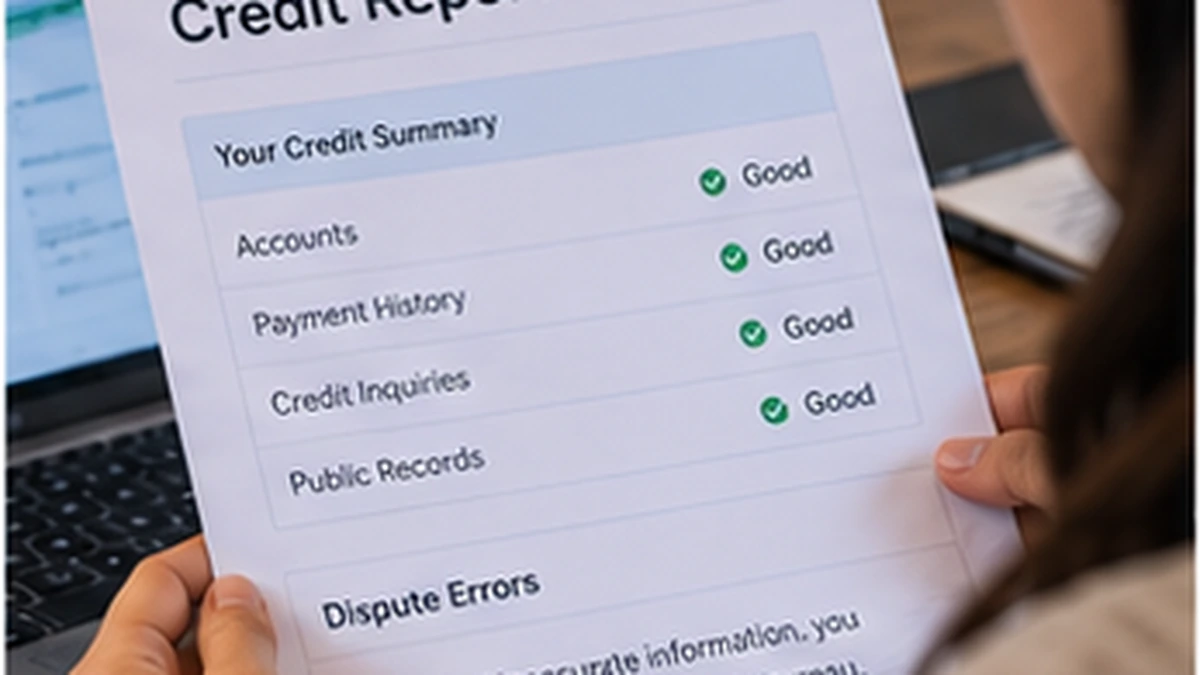
    Review a credit report Reviewing a credit report is a quality-control task. The goal is to confirm that the file belongs to you, the accounts are yours, account status is accurate, balances and limits are correct, and negative information is not duplicated or reported under the wrong identity.

    This guide explains review a credit report for general financial education. It does not provide individualized investment, tax, legal, credit, or banking advice. Some authoritative sources are U.S.-focused, so readers elsewhere should verify local rules and product terms with the appropriate authority.

    Why review a credit report matters

    A dispute is easier to investigate when each error is described separately and supported with a specific document. A long emotional explanation is usually less useful than a short statement identifying the exact field, why it is wrong, and what evidence supports correction.

    Check identity information first

    CFPB recommends reviewing names, addresses, and other identifying information so a mixed file or identity mistake is easier to detect.

    For review a credit report, connect this section to one real number, account, report item, contribution, or decision in your own finances. Review checkpoint 1: write the relevant amount, date, fee, balance, or goal so the idea can be tested rather than remaining theoretical.

    Look for unfamiliar accounts

    An account you did not open may reflect a reporting error, a mixed file, or identity theft and deserves investigation.

    For review a credit report, connect this section to one real number, account, report item, contribution, or decision in your own finances. Review checkpoint 2: write the relevant amount, date, fee, balance, or goal so the idea can be tested rather than remaining theoretical.

    Check account ownership

    Verify whether you are correctly listed as owner, joint owner, or authorized user rather than assuming every listed account has the right relationship.

    For review a credit report, connect this section to one real number, account, report item, contribution, or decision in your own finances. Review checkpoint 3: write the relevant amount, date, fee, balance, or goal so the idea can be tested rather than remaining theoretical.

    Review payment status

    Look for accounts incorrectly marked late, delinquent, open, or closed.

    For review a credit report, connect this section to one real number, account, report item, contribution, or decision in your own finances. Review checkpoint 4: write the relevant amount, date, fee, balance, or goal so the idea can be tested rather than remaining theoretical.

    Check important dates

    Opening dates, last-payment dates, and delinquency dates can affect how an account is interpreted.

    For review a credit report, connect this section to one real number, account, report item, contribution, or decision in your own finances. Review checkpoint 5: write the relevant amount, date, fee, balance, or goal so the idea can be tested rather than remaining theoretical.

    Review balances and limits

    CFPB identifies incorrect balances and credit limits among common credit-report errors.

    For review a credit report, connect this section to one real number, account, report item, contribution, or decision in your own finances. Review checkpoint 6: write the relevant amount, date, fee, balance, or goal so the idea can be tested rather than remaining theoretical.

    Watch for duplicate debts

    The same obligation can sometimes appear more than once under different names, particularly after collection activity.

    For review a credit report, connect this section to one real number, account, report item, contribution, or decision in your own finances. Review checkpoint 7: write the relevant amount, date, fee, balance, or goal so the idea can be tested rather than remaining theoretical.

    Collect evidence before disputing

    Statements, account letters, payment records, identity documents, or court records can support a dispute.

    For review a credit report, connect this section to one real number, account, report item, contribution, or decision in your own finances. Review checkpoint 8: write the relevant amount, date, fee, balance, or goal so the idea can be tested rather than remaining theoretical.

    Dispute with the reporting company and furnisher

    CFPB explains that consumers can dispute inaccurate information with the credit reporting company and the company that supplied the information.

    For review a credit report, connect this section to one real number, account, report item, contribution, or decision in your own finances. Review checkpoint 9: write the relevant amount, date, fee, balance, or goal so the idea can be tested rather than remaining theoretical.

    Keep the dispute record

    Save the report, submitted dispute, supporting documents, delivery or confirmation details, investigation response, and any corrected report.

    For review a credit report, connect this section to one real number, account, report item, contribution, or decision in your own finances. Review checkpoint 10: write the relevant amount, date, fee, balance, or goal so the idea can be tested rather than remaining theoretical.

    A realistic example of review a credit report

    A person wants to improve this part of their finances and initially focuses on one attractive number, such as a high rate, low fee, strong score, or recent return. After reviewing the full account terms, budget, risk, time horizon, and goal, the person chooses a plan that is easier to maintain. The example shows why review a credit report should be connected to the whole financial picture rather than one headline figure.

    Connect this guide to the rest of the finance site

    Read credit report vs credit score for one related finance topic, and use financial scams and identity theft when the second guide helps you understand saving, credit, investing, retirement, or financial safety.

    These internal links connect the first Finance batch so readers can move between budgeting, banking, credit, investing, retirement, and fraud protection without repeating the same article.

    A seven-day review plan for review a credit report

    Day 1: define the goal. Day 2: collect the relevant account, statement, report, or budget data. Day 3: compare the information with the authoritative source below. Day 4: identify costs, risks, and missing information. Day 5: make one small adjustment. Day 6: verify that the change worked as intended. Day 7: record the next step and a date to review the result again. Finance review note 5 for review a credit report.

    The seven-day structure is only a framework. A credit-report correction or account transfer can require more time, while a simple budget or savings update may take less than an hour.

    Practical checklist

    • Purpose of review a credit report identified
    • Current financial information collected
    • Costs, fees, or risks reviewed
    • Authoritative source checked
    • Assumptions separated from facts
    • Privacy and security considered
    • One practical next step selected
    • Review date scheduled

    Use the checklist to find the weakest part of your understanding of review a credit report. One overlooked fee, report error, concentration risk, or security problem can matter more than several details you already understand.

    Frequently Asked Questions

    Is there one financial strategy that works for everyone?

    No. Income, expenses, goals, time horizon, taxes, debt, risk tolerance, and local rules differ. General frameworks should be adapted to the person’s actual situation.

    Should short-term savings and long-term investments be handled the same way?

    Usually not. Money needed soon generally needs more stability and access, while long-term investing can accept more market fluctuation depending on risk tolerance and the goal.

    Can one financial number tell me whether a decision is good?

    No. A rate, score, return, fee, or balance is only part of the picture. Review the product terms, cash-flow effect, risk, and goal together.

    Where should I verify financial information?

    Use the bank, regulator, tax authority, securities regulator, credit-reporting company, or other official source with authority over the product or issue in your jurisdiction.

    Practical review 1 for review a credit report

    Take one real account, statement, report, or savings goal and explain it in plain language. Identify the amount involved, the cost or risk, what can change, and what action would improve the situation. If any part depends on a rule or product term you cannot verify, check it before acting. Finance review note 19 for review a credit report.

    Then compare the current approach with one realistic alternative. The goal is not to find a perfect financial answer; it is to understand the trade-off well enough to choose the next step deliberately and to know what evidence would make you change that decision later. Finance review note 19 for review a credit report.

    Practical review 2 for review a credit report

    Take one real account, statement, report, or savings goal and explain it in plain language. Identify the amount involved, the cost or risk, what can change, and what action would improve the situation. If any part depends on a rule or product term you cannot verify, check it before acting. Finance review note 20 for review a credit report.

    Then compare the current approach with one realistic alternative. The goal is not to find a perfect financial answer; it is to understand the trade-off well enough to choose the next step deliberately and to know what evidence would make you change that decision later. Finance review note 20 for review a credit report.

    Practical review 3 for review a credit report

    Take one real account, statement, report, or savings goal and explain it in plain language. Identify the amount involved, the cost or risk, what can change, and what action would improve the situation. If any part depends on a rule or product term you cannot verify, check it before acting. Finance review note 21 for review a credit report.

    Then compare the current approach with one realistic alternative. The goal is not to find a perfect financial answer; it is to understand the trade-off well enough to choose the next step deliberately and to know what evidence would make you change that decision later. Finance review note 21 for review a credit report.

    Practical review 4 for review a credit report

    Take one real account, statement, report, or savings goal and explain it in plain language. Identify the amount involved, the cost or risk, what can change, and what action would improve the situation. If any part depends on a rule or product term you cannot verify, check it before acting. Finance review note 22 for review a credit report.

    Then compare the current approach with one realistic alternative. The goal is not to find a perfect financial answer; it is to understand the trade-off well enough to choose the next step deliberately and to know what evidence would make you change that decision later. Finance review note 22 for review a credit report.

    Practical review 5 for review a credit report

    Take one real account, statement, report, or savings goal and explain it in plain language. Identify the amount involved, the cost or risk, what can change, and what action would improve the situation. If any part depends on a rule or product term you cannot verify, check it before acting. Finance review note 23 for review a credit report.

    Then compare the current approach with one realistic alternative. The goal is not to find a perfect financial answer; it is to understand the trade-off well enough to choose the next step deliberately and to know what evidence would make you change that decision later. Finance review note 23 for review a credit report.

    Authoritative resource to review

    For an authoritative reference related to this topic, review Consumer Financial Protection Bureau – Common Credit Report Errors. Use the source for the core principle, then verify the exact account terms, local rules, and personal circumstances before acting.

    Final perspective

    Review a credit report becomes easier when the process is simple enough to repeat. Use real numbers, keep records, understand risk, protect accounts, and review the plan periodically instead of relying on one-time decisions or financial promises.
  • Credit Report vs Credit Score: What Is the Difference?

    Credit Report vs Credit Score: What Is the Difference?

    Credit report vs credit score A credit report and a credit score are connected, but they are not the same product. The report contains the underlying history, while a score is a number calculated from report information using a particular scoring model.

    This guide explains credit report vs credit score for general financial education. It does not provide individualized investment, tax, legal, credit, or banking advice. Some authoritative sources are U.S.-focused, so readers elsewhere should verify local rules and product terms with the appropriate authority.

    Why credit report vs credit score matters

    Treat the credit score as a summary signal and the credit report as the evidence file. If the score changes unexpectedly, start by reviewing the underlying report rather than trying to guess which scoring factor changed.

    A credit report contains account information

    Reports can include credit accounts, payment history, balances, inquiries, and other information supplied to a credit reporting company.

    For credit report vs credit score, connect this section to one real number, account, report item, contribution, or decision in your own finances. Review checkpoint 1: write the relevant amount, date, fee, balance, or goal so the idea can be tested rather than remaining theoretical.

    A credit score is calculated

    A score is generated from report data using a scoring model designed to estimate credit risk. Different models can produce different numbers.

    For credit report vs credit score, connect this section to one real number, account, report item, contribution, or decision in your own finances. Review checkpoint 2: write the relevant amount, date, fee, balance, or goal so the idea can be tested rather than remaining theoretical.

    Reports provide the detail behind the number

    Account names, balances, payment status, dates, limits, and other fields can explain why the underlying credit history looks the way it does.

    For credit report vs credit score, connect this section to one real number, account, report item, contribution, or decision in your own finances. Review checkpoint 3: write the relevant amount, date, fee, balance, or goal so the idea can be tested rather than remaining theoretical.

    Scores are not universal

    A lender may use a different model or report version from the score a consumer sees through another service.

    For credit report vs credit score, connect this section to one real number, account, report item, contribution, or decision in your own finances. Review checkpoint 4: write the relevant amount, date, fee, balance, or goal so the idea can be tested rather than remaining theoretical.

    Report errors can affect scores

    CFPB emphasizes that incorrect report information can harm credit history and the scores calculated from it.

    For credit report vs credit score, connect this section to one real number, account, report item, contribution, or decision in your own finances. Review checkpoint 5: write the relevant amount, date, fee, balance, or goal so the idea can be tested rather than remaining theoretical.

    Payment history matters

    Paying obligations on time supports a stronger credit history, although individual scoring models weigh factors differently.

    For credit report vs credit score, connect this section to one real number, account, report item, contribution, or decision in your own finances. Review checkpoint 6: write the relevant amount, date, fee, balance, or goal so the idea can be tested rather than remaining theoretical.

    Credit utilization can matter

    High balances relative to revolving credit limits can affect some scoring models, particularly when a large share of available credit is used.

    For credit report vs credit score, connect this section to one real number, account, report item, contribution, or decision in your own finances. Review checkpoint 7: write the relevant amount, date, fee, balance, or goal so the idea can be tested rather than remaining theoretical.

    New credit activity can matter

    Recent inquiries and newly opened accounts can influence certain scoring models, especially when several applications occur close together.

    For credit report vs credit score, connect this section to one real number, account, report item, contribution, or decision in your own finances. Review checkpoint 8: write the relevant amount, date, fee, balance, or goal so the idea can be tested rather than remaining theoretical.

    Closing accounts can change the picture

    Closing a revolving account can reduce available credit and change utilization, which can affect a score depending on the rest of the file.

    For credit report vs credit score, connect this section to one real number, account, report item, contribution, or decision in your own finances. Review checkpoint 9: write the relevant amount, date, fee, balance, or goal so the idea can be tested rather than remaining theoretical.

    Review the report, not only the score

    A score cannot show whether an unknown account, wrong balance, incorrect address, or identity-theft indicator is present in the report.

    For credit report vs credit score, connect this section to one real number, account, report item, contribution, or decision in your own finances. Review checkpoint 10: write the relevant amount, date, fee, balance, or goal so the idea can be tested rather than remaining theoretical.

    A realistic example of credit report vs credit score

    A person wants to improve this part of their finances and initially focuses on one attractive number, such as a high rate, low fee, strong score, or recent return. After reviewing the full account terms, budget, risk, time horizon, and goal, the person chooses a plan that is easier to maintain. The example shows why credit report vs credit score should be connected to the whole financial picture rather than one headline figure.

    Connect this guide to the rest of the finance site

    Read review a credit report for one related finance topic, and use financial scams and identity theft when the second guide helps you understand saving, credit, investing, retirement, or financial safety.

    These internal links connect the first Finance batch so readers can move between budgeting, banking, credit, investing, retirement, and fraud protection without repeating the same article.

    A seven-day review plan for credit report vs credit score

    Day 1: define the goal. Day 2: collect the relevant account, statement, report, or budget data. Day 3: compare the information with the authoritative source below. Day 4: identify costs, risks, and missing information. Day 5: make one small adjustment. Day 6: verify that the change worked as intended. Day 7: record the next step and a date to review the result again. Finance review note 4 for credit report vs credit score.

    The seven-day structure is only a framework. A credit-report correction or account transfer can require more time, while a simple budget or savings update may take less than an hour.

    Practical checklist

    • Purpose of credit report vs credit score identified
    • Current financial information collected
    • Costs, fees, or risks reviewed
    • Authoritative source checked
    • Assumptions separated from facts
    • Privacy and security considered
    • One practical next step selected
    • Review date scheduled

    Use the checklist to find the weakest part of your understanding of credit report vs credit score. One overlooked fee, report error, concentration risk, or security problem can matter more than several details you already understand.

    Frequently Asked Questions

    Is there one financial strategy that works for everyone?

    No. Income, expenses, goals, time horizon, taxes, debt, risk tolerance, and local rules differ. General frameworks should be adapted to the person’s actual situation.

    Should short-term savings and long-term investments be handled the same way?

    Usually not. Money needed soon generally needs more stability and access, while long-term investing can accept more market fluctuation depending on risk tolerance and the goal.

    Can one financial number tell me whether a decision is good?

    No. A rate, score, return, fee, or balance is only part of the picture. Review the product terms, cash-flow effect, risk, and goal together.

    Where should I verify financial information?

    Use the bank, regulator, tax authority, securities regulator, credit-reporting company, or other official source with authority over the product or issue in your jurisdiction.

    Practical review 1 for credit report vs credit score

    Take one real account, statement, report, or savings goal and explain it in plain language. Identify the amount involved, the cost or risk, what can change, and what action would improve the situation. If any part depends on a rule or product term you cannot verify, check it before acting. Finance review note 14 for credit report vs credit score.

    Then compare the current approach with one realistic alternative. The goal is not to find a perfect financial answer; it is to understand the trade-off well enough to choose the next step deliberately and to know what evidence would make you change that decision later. Finance review note 14 for credit report vs credit score.

    Practical review 2 for credit report vs credit score

    Take one real account, statement, report, or savings goal and explain it in plain language. Identify the amount involved, the cost or risk, what can change, and what action would improve the situation. If any part depends on a rule or product term you cannot verify, check it before acting. Finance review note 15 for credit report vs credit score.

    Then compare the current approach with one realistic alternative. The goal is not to find a perfect financial answer; it is to understand the trade-off well enough to choose the next step deliberately and to know what evidence would make you change that decision later. Finance review note 15 for credit report vs credit score.

    Practical review 3 for credit report vs credit score

    Take one real account, statement, report, or savings goal and explain it in plain language. Identify the amount involved, the cost or risk, what can change, and what action would improve the situation. If any part depends on a rule or product term you cannot verify, check it before acting. Finance review note 16 for credit report vs credit score.

    Then compare the current approach with one realistic alternative. The goal is not to find a perfect financial answer; it is to understand the trade-off well enough to choose the next step deliberately and to know what evidence would make you change that decision later. Finance review note 16 for credit report vs credit score.

    Practical review 4 for credit report vs credit score

    Take one real account, statement, report, or savings goal and explain it in plain language. Identify the amount involved, the cost or risk, what can change, and what action would improve the situation. If any part depends on a rule or product term you cannot verify, check it before acting. Finance review note 17 for credit report vs credit score.

    Then compare the current approach with one realistic alternative. The goal is not to find a perfect financial answer; it is to understand the trade-off well enough to choose the next step deliberately and to know what evidence would make you change that decision later. Finance review note 17 for credit report vs credit score.

    Practical review 5 for credit report vs credit score

    Take one real account, statement, report, or savings goal and explain it in plain language. Identify the amount involved, the cost or risk, what can change, and what action would improve the situation. If any part depends on a rule or product term you cannot verify, check it before acting. Finance review note 18 for credit report vs credit score.

    Then compare the current approach with one realistic alternative. The goal is not to find a perfect financial answer; it is to understand the trade-off well enough to choose the next step deliberately and to know what evidence would make you change that decision later. Finance review note 18 for credit report vs credit score.

    Authoritative resource to review

    For an authoritative reference related to this topic, review Consumer Financial Protection Bureau – Credit Reports and Scores. Use the source for the core principle, then verify the exact account terms, local rules, and personal circumstances before acting.

    Final perspective

    Credit report vs credit score becomes easier when the process is simple enough to repeat. Use real numbers, keep records, understand risk, protect accounts, and review the plan periodically instead of relying on one-time decisions or financial promises.

  • How to Build an Emergency Fund for Unexpected Expenses

    How to Build an Emergency Fund for Unexpected Expenses

    Build an emergency fund An emergency fund is money reserved for expenses that are not part of the normal monthly plan. It can reduce the need to use high-cost debt when a car breaks, income stops, a medical bill arrives, or another unexpected problem needs immediate cash.

    This guide explains build an emergency fund for general financial education. It does not provide individualized investment, tax, legal, credit, or banking advice. Some authoritative sources are U.S.-focused, so readers elsewhere should verify local rules and product terms with the appropriate authority.

    Why build an emergency fund matters

    Instead of choosing an emergency target from a generic rule, calculate the cost of the three most realistic disruptions in your life. That exercise produces a target connected to your housing, transport, health, and income rather than to someone else’s circumstances.

    Define what counts as an emergency

    CFPB describes emergency savings as a cash reserve for unplanned expenses or financial emergencies. Write examples that apply to your own household.

    For build an emergency fund, connect this section to one real number, account, report item, contribution, or decision in your own finances. Review checkpoint 1: write the relevant amount, date, fee, balance, or goal so the idea can be tested rather than remaining theoretical.

    Choose a target based on real risk

    Review past emergencies and the expenses that would be hardest to absorb. A household with unstable income may value a different target from one with predictable pay.

    For build an emergency fund, connect this section to one real number, account, report item, contribution, or decision in your own finances. Review checkpoint 2: write the relevant amount, date, fee, balance, or goal so the idea can be tested rather than remaining theoretical.

    Start with a small first milestone

    A reachable first target creates progress quickly and makes the saving habit easier to sustain before working toward a larger reserve.

    For build an emergency fund, connect this section to one real number, account, report item, contribution, or decision in your own finances. Review checkpoint 3: write the relevant amount, date, fee, balance, or goal so the idea can be tested rather than remaining theoretical.

    Keep the money separate

    A separate savings account or clearly labeled savings bucket can reduce accidental spending and make the emergency balance easier to track.

    For build an emergency fund, connect this section to one real number, account, report item, contribution, or decision in your own finances. Review checkpoint 4: write the relevant amount, date, fee, balance, or goal so the idea can be tested rather than remaining theoretical.

    Automate deposits when possible

    A recurring transfer after payday can turn saving into a routine, provided the amount does not cause required bills or normal spending to fail.

    For build an emergency fund, connect this section to one real number, account, report item, contribution, or decision in your own finances. Review checkpoint 5: write the relevant amount, date, fee, balance, or goal so the idea can be tested rather than remaining theoretical.

    Use windfalls intentionally

    Tax refunds, bonuses, gifts, or stronger income months can accelerate progress when part of the money is assigned to the emergency reserve before it is spent elsewhere.

    For build an emergency fund, connect this section to one real number, account, report item, contribution, or decision in your own finances. Review checkpoint 6: write the relevant amount, date, fee, balance, or goal so the idea can be tested rather than remaining theoretical.

    Create rules for using the fund

    Decide which events qualify and which expenses should be handled by the normal budget. Clear rules reduce both unnecessary withdrawals and hesitation during a real emergency.

    For build an emergency fund, connect this section to one real number, account, report item, contribution, or decision in your own finances. Review checkpoint 7: write the relevant amount, date, fee, balance, or goal so the idea can be tested rather than remaining theoretical.

    Refill after a withdrawal

    Using the fund for a real emergency is not a failure. Rebuild it gradually after the event so the next disruption does not arrive with no buffer.

    For build an emergency fund, connect this section to one real number, account, report item, contribution, or decision in your own finances. Review checkpoint 8: write the relevant amount, date, fee, balance, or goal so the idea can be tested rather than remaining theoretical.

    Keep emergency money accessible

    The reserve should generally be reachable without taking market risk or waiting through a long restriction, while still being separate from everyday spending.

    For build an emergency fund, connect this section to one real number, account, report item, contribution, or decision in your own finances. Review checkpoint 9: write the relevant amount, date, fee, balance, or goal so the idea can be tested rather than remaining theoretical.

    Review the target after life changes

    Housing, family size, employment, health, transport, and other responsibilities can change the amount of emergency cash that makes sense.

    For build an emergency fund, connect this section to one real number, account, report item, contribution, or decision in your own finances. Review checkpoint 10: write the relevant amount, date, fee, balance, or goal so the idea can be tested rather than remaining theoretical.

    A realistic example of build an emergency fund

    A person wants to improve this part of their finances and initially focuses on one attractive number, such as a high rate, low fee, strong score, or recent return. After reviewing the full account terms, budget, risk, time horizon, and goal, the person chooses a plan that is easier to maintain. The example shows why build an emergency fund should be connected to the whole financial picture rather than one headline figure.

    Connect this guide to the rest of the finance site

    Read build a monthly budget for one related finance topic, and use checking vs savings account when the second guide helps you understand saving, credit, investing, retirement, or financial safety.

    These internal links connect the first Finance batch so readers can move between budgeting, banking, credit, investing, retirement, and fraud protection without repeating the same article.

    A seven-day review plan for build an emergency fund

    Day 1: define the goal. Day 2: collect the relevant account, statement, report, or budget data. Day 3: compare the information with the authoritative source below. Day 4: identify costs, risks, and missing information. Day 5: make one small adjustment. Day 6: verify that the change worked as intended. Day 7: record the next step and a date to review the result again. Finance review note 2 for build an emergency fund.

    The seven-day structure is only a framework. A credit-report correction or account transfer can require more time, while a simple budget or savings update may take less than an hour.

    Practical checklist

    • Purpose of build an emergency fund identified
    • Current financial information collected
    • Costs, fees, or risks reviewed
    • Authoritative source checked
    • Assumptions separated from facts
    • Privacy and security considered
    • One practical next step selected
    • Review date scheduled

    Use the checklist to find the weakest part of your understanding of build an emergency fund. One overlooked fee, report error, concentration risk, or security problem can matter more than several details you already understand.

    Frequently Asked Questions

    Is there one financial strategy that works for everyone?

    No. Income, expenses, goals, time horizon, taxes, debt, risk tolerance, and local rules differ. General frameworks should be adapted to the person’s actual situation.

    Should short-term savings and long-term investments be handled the same way?

    Usually not. Money needed soon generally needs more stability and access, while long-term investing can accept more market fluctuation depending on risk tolerance and the goal.

    Can one financial number tell me whether a decision is good?

    No. A rate, score, return, fee, or balance is only part of the picture. Review the product terms, cash-flow effect, risk, and goal together.

    Where should I verify financial information?

    Use the bank, regulator, tax authority, securities regulator, credit-reporting company, or other official source with authority over the product or issue in your jurisdiction.

    Practical review 1 for build an emergency fund

    Take one real account, statement, report, or savings goal and explain it in plain language. Identify the amount involved, the cost or risk, what can change, and what action would improve the situation. If any part depends on a rule or product term you cannot verify, check it before acting. Finance review note 5 for build an emergency fund.

    Then compare the current approach with one realistic alternative. The goal is not to find a perfect financial answer; it is to understand the trade-off well enough to choose the next step deliberately and to know what evidence would make you change that decision later. Finance review note 5 for build an emergency fund.

    Practical review 2 for build an emergency fund

    Take one real account, statement, report, or savings goal and explain it in plain language. Identify the amount involved, the cost or risk, what can change, and what action would improve the situation. If any part depends on a rule or product term you cannot verify, check it before acting. Finance review note 6 for build an emergency fund.

    Then compare the current approach with one realistic alternative. The goal is not to find a perfect financial answer; it is to understand the trade-off well enough to choose the next step deliberately and to know what evidence would make you change that decision later. Finance review note 6 for build an emergency fund.

    Practical review 3 for build an emergency fund

    Take one real account, statement, report, or savings goal and explain it in plain language. Identify the amount involved, the cost or risk, what can change, and what action would improve the situation. If any part depends on a rule or product term you cannot verify, check it before acting. Finance review note 7 for build an emergency fund.

    Then compare the current approach with one realistic alternative. The goal is not to find a perfect financial answer; it is to understand the trade-off well enough to choose the next step deliberately and to know what evidence would make you change that decision later. Finance review note 7 for build an emergency fund.

    Practical review 4 for build an emergency fund

    Take one real account, statement, report, or savings goal and explain it in plain language. Identify the amount involved, the cost or risk, what can change, and what action would improve the situation. If any part depends on a rule or product term you cannot verify, check it before acting. Finance review note 8 for build an emergency fund.

    Then compare the current approach with one realistic alternative. The goal is not to find a perfect financial answer; it is to understand the trade-off well enough to choose the next step deliberately and to know what evidence would make you change that decision later. Finance review note 8 for build an emergency fund.

    Authoritative resource to review

    For an authoritative reference related to this topic, review Consumer Financial Protection Bureau – Emergency Fund Guide. Use the source for the core principle, then verify the exact account terms, local rules, and personal circumstances before acting.

    Final perspective

    Build an emergency fund becomes easier when the process is simple enough to repeat. Use real numbers, keep records, understand risk, protect accounts, and review the plan periodically instead of relying on one-time decisions or financial promises.

  • How to Build a Monthly Budget That Matches Your Real Spending

    How to Build a Monthly Budget That Matches Your Real Spending

    Build a monthly budget A useful budget is a record of how money actually moves through the month, not a wish list built from ideal spending. The strongest starting point is take-home income, recent statements, recurring bills, and a realistic allowance for expenses that do not arrive every month.

    This guide explains build a monthly budget for general financial education. It does not provide individualized investment, tax, legal, credit, or banking advice. Some authoritative sources are U.S.-focused, so readers elsewhere should verify local rules and product terms with the appropriate authority.

    Why build a monthly budget matters

    A budget is most useful when it explains trade-offs. If spending in one category rises, decide which other category will absorb the change rather than allowing the total plan to expand silently. This makes the budget a decision tool instead of a passive report.

    Start with take-home income

    List the income that actually reaches your accounts after taxes and payroll deductions. If earnings vary, use a conservative baseline and keep irregular income separate until it is received.

    For build a monthly budget, connect this section to one real number, account, report item, contribution, or decision in your own finances. Review checkpoint 1: write the relevant amount, date, fee, balance, or goal so the idea can be tested rather than remaining theoretical.

    Track several months of spending

    Review bank, card, and cash spending across several months so annual fees, travel, medical costs, school expenses, gifts, and other irregular items are not forgotten.

    For build a monthly budget, connect this section to one real number, account, report item, contribution, or decision in your own finances. Review checkpoint 2: write the relevant amount, date, fee, balance, or goal so the idea can be tested rather than remaining theoretical.

    Separate fixed, flexible, and irregular costs

    Housing and some debt payments may be fixed, while food, transport, and entertainment can move. Irregular costs deserve their own category instead of becoming surprise overspending.

    For build a monthly budget, connect this section to one real number, account, report item, contribution, or decision in your own finances. Review checkpoint 3: write the relevant amount, date, fee, balance, or goal so the idea can be tested rather than remaining theoretical.

    Include saving as a planned use of money

    Treat emergency savings, retirement contributions, and other goals as categories in the plan rather than hoping money will remain after every other expense.

    For build a monthly budget, connect this section to one real number, account, report item, contribution, or decision in your own finances. Review checkpoint 4: write the relevant amount, date, fee, balance, or goal so the idea can be tested rather than remaining theoretical.

    Add a miscellaneous category

    CFPB guidance recommends including room for out-of-the-ordinary spending because real months include repairs, events, travel, and other costs that cannot always be predicted exactly.

    For build a monthly budget, connect this section to one real number, account, report item, contribution, or decision in your own finances. Review checkpoint 5: write the relevant amount, date, fee, balance, or goal so the idea can be tested rather than remaining theoretical.

    Compare the plan with actual statements

    A budget based only on memory can miss subscriptions, fees, cash withdrawals, and recurring charges. Statements provide evidence that the category amounts are realistic.

    For build a monthly budget, connect this section to one real number, account, report item, contribution, or decision in your own finances. Review checkpoint 6: write the relevant amount, date, fee, balance, or goal so the idea can be tested rather than remaining theoretical.

    Adjust one category at a time

    Changing every category at once makes it difficult to see which adjustment actually helped. Start with one flexible area that can be reduced without disrupting essentials.

    For build a monthly budget, connect this section to one real number, account, report item, contribution, or decision in your own finances. Review checkpoint 7: write the relevant amount, date, fee, balance, or goal so the idea can be tested rather than remaining theoretical.

    Use a weekly check-in

    A short weekly review can catch fast spending before the month is already over and can reveal whether one category needs to borrow from another.

    For build a monthly budget, connect this section to one real number, account, report item, contribution, or decision in your own finances. Review checkpoint 8: write the relevant amount, date, fee, balance, or goal so the idea can be tested rather than remaining theoretical.

    Plan known future expenses

    Put annual renewals, birthdays, tuition, travel, maintenance, taxes, and seasonal expenses on a calendar and set aside money before the due date.

    For build a monthly budget, connect this section to one real number, account, report item, contribution, or decision in your own finances. Review checkpoint 9: write the relevant amount, date, fee, balance, or goal so the idea can be tested rather than remaining theoretical.

    Review the budget after every month

    Compare planned and actual spending, then update the next month. A budget improves when it learns from real behavior instead of staying frozen.

    For build a monthly budget, connect this section to one real number, account, report item, contribution, or decision in your own finances. Review checkpoint 10: write the relevant amount, date, fee, balance, or goal so the idea can be tested rather than remaining theoretical.

    A realistic example of build a monthly budget

    A person wants to improve this part of their finances and initially focuses on one attractive number, such as a high rate, low fee, strong score, or recent return. After reviewing the full account terms, budget, risk, time horizon, and goal, the person chooses a plan that is easier to maintain. The example shows why build a monthly budget should be connected to the whole financial picture rather than one headline figure.

    Connect this guide to the rest of the finance site

    Read build an emergency fund for one related finance topic, and use retirement saving basics when the second guide helps you understand saving, credit, investing, retirement, or financial safety.

    These internal links connect the first Finance batch so readers can move between budgeting, banking, credit, investing, retirement, and fraud protection without repeating the same article.

    A seven-day review plan for build a monthly budget

    Day 1: define the goal. Day 2: collect the relevant account, statement, report, or budget data. Day 3: compare the information with the authoritative source below. Day 4: identify costs, risks, and missing information. Day 5: make one small adjustment. Day 6: verify that the change worked as intended. Day 7: record the next step and a date to review the result again. Finance review note 1 for build a monthly budget.

    The seven-day structure is only a framework. A credit-report correction or account transfer can require more time, while a simple budget or savings update may take less than an hour.

    Practical checklist

    • Purpose of build a monthly budget identified
    • Current financial information collected
    • Costs, fees, or risks reviewed
    • Authoritative source checked
    • Assumptions separated from facts
    • Privacy and security considered
    • One practical next step selected
    • Review date scheduled

    Use the checklist to find the weakest part of your understanding of build a monthly budget. One overlooked fee, report error, concentration risk, or security problem can matter more than several details you already understand.

    Frequently Asked Questions

    Is there one financial strategy that works for everyone?

    No. Income, expenses, goals, time horizon, taxes, debt, risk tolerance, and local rules differ. General frameworks should be adapted to the person’s actual situation.

    Should short-term savings and long-term investments be handled the same way?

    Usually not. Money needed soon generally needs more stability and access, while long-term investing can accept more market fluctuation depending on risk tolerance and the goal.

    Can one financial number tell me whether a decision is good?

    No. A rate, score, return, fee, or balance is only part of the picture. Review the product terms, cash-flow effect, risk, and goal together.

    Where should I verify financial information?

    Use the bank, regulator, tax authority, securities regulator, credit-reporting company, or other official source with authority over the product or issue in your jurisdiction.

    Practical review 1 for build a monthly budget

    Take one real account, statement, report, or savings goal and explain it in plain language. Identify the amount involved, the cost or risk, what can change, and what action would improve the situation. If any part depends on a rule or product term you cannot verify, check it before acting. Finance review note 1 for build a monthly budget.

    Then compare the current approach with one realistic alternative. The goal is not to find a perfect financial answer; it is to understand the trade-off well enough to choose the next step deliberately and to know what evidence would make you change that decision later. Finance review note 1 for build a monthly budget.

    Practical review 2 for build a monthly budget

    Take one real account, statement, report, or savings goal and explain it in plain language. Identify the amount involved, the cost or risk, what can change, and what action would improve the situation. If any part depends on a rule or product term you cannot verify, check it before acting. Finance review note 2 for build a monthly budget.

    Then compare the current approach with one realistic alternative. The goal is not to find a perfect financial answer; it is to understand the trade-off well enough to choose the next step deliberately and to know what evidence would make you change that decision later. Finance review note 2 for build a monthly budget.

    Practical review 3 for build a monthly budget

    Take one real account, statement, report, or savings goal and explain it in plain language. Identify the amount involved, the cost or risk, what can change, and what action would improve the situation. If any part depends on a rule or product term you cannot verify, check it before acting. Finance review note 3 for build a monthly budget.

    Then compare the current approach with one realistic alternative. The goal is not to find a perfect financial answer; it is to understand the trade-off well enough to choose the next step deliberately and to know what evidence would make you change that decision later. Finance review note 3 for build a monthly budget.

    Practical review 4 for build a monthly budget

    Take one real account, statement, report, or savings goal and explain it in plain language. Identify the amount involved, the cost or risk, what can change, and what action would improve the situation. If any part depends on a rule or product term you cannot verify, check it before acting. Finance review note 4 for build a monthly budget.

    Then compare the current approach with one realistic alternative. The goal is not to find a perfect financial answer; it is to understand the trade-off well enough to choose the next step deliberately and to know what evidence would make you change that decision later. Finance review note 4 for build a monthly budget.

    Authoritative resource to review

    For an authoritative reference related to this topic, review Consumer Financial Protection Bureau – Assess Your Spending. Use the source for the core principle, then verify the exact account terms, local rules, and personal circumstances before acting.

    Final perspective

    Build a monthly budget becomes easier when the process is simple enough to repeat. Use real numbers, keep records, understand risk, protect accounts, and review the plan periodically instead of relying on one-time decisions or financial promises.